
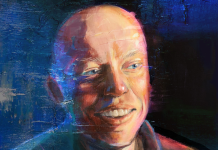




















 Dr Alex George, one of the UK’s leading mental health speakers, has become a powerful voice for change in how we approach wellbeing—especially among young people.
A practising A&E doctor and former Love Island contestant, Dr George was appointed by the Prime Minister as the UK’s first Youth Mental Health Ambassador, where he now works across government and education to embed mental health support into national policy.
In this exclusive interview with The Motivational Speakers Agency, Dr George reflects on his personal journey with mental health, the urgent need for early intervention, and how we can collectively break the stigma by opening up honest conversations.
Q: As Downing Street’s Ambassador for Youth Mental Health, how do you navigate the intersection between policy and advocacy to create meaningful change for young people?
Dr Alex George: Yeah, it was a pretty unbelievable kind of feeling, I think. You know, I started the campaign wanting to speak to the Prime Minister about some of the issues that have been raised by many of the experts, the kind of charities, the leaders, I guess, on mental health. And I’ve put a lot of time speaking with those parties and finding out more information about what we need to do. And I wanted just to kind of go across from those points.
I never dreamed that actually I would end up in this role as Youth Mental Health Ambassador. Really, what this role entails is to try and bring the focus of government and what they’re doing, decisions they’re making, to think about mental health in all the decisions they’re making.
There are so many experts around the table. I’m not there to advise the government on what the best practice of certain treatment is, or whatever it is. I’m there as an advocate, really, for mental health — to give, and use my platform to give young people a voice, and that’s what I hope to do. That’s what we are working hard to do at the moment: to try and amplify the message, try and get things done.
Q: You’ve been an outspoken advocate for mental health since your time on Love Island, but did your personal interest in the subject begin earlier? Can you share the origins of that passion?
Dr Alex George: So I think my interest, I guess, or my focus around mental health started at university. So in my fourth year, I studied actually down in Exeter and Plymouth — that was the university I was in — and we were on placement, some of us went on placement down in Truro. Cornwall is a beautiful part of the world, beautiful beaches and all that. But actually, I ended up quite isolated.
I really became quite lost. I think I almost got stuck into a rut. I wasn’t feeling very good, probably had a very mild depression at the time. I lost interest in my sports and exercise, I wasn’t going out walking, my food was — my eating was terrible. My sleep was even worse, and I was kind of losing myself a little bit.
And I felt too ashamed, actually, to speak to the [medical] school. I thought, “Well, they won’t let me graduate.” I thought the [medical] school wouldn’t let me graduate, actually, if I spoke to them. So I eventually called my family — my mum, actually — and said, “Look, this is how I feel,” and she said — very wise actually for someone who is not medical at all — she said you’re not doing the thing that actually would keep you feeling good.
So talk about how you feel each day, let’s keep an eye on things, but let’s also build these routines up. So I started exercising again, I made sure I had a walk every single day to get some natural light, planned to see my friends, and made an actual good plan to do things with them.


I created a sleep routine: time of getting up in the morning, time going to bed, and I planned my meals. It’s all very simple stuff, really, but it made a huge, huge difference. And within weeks I felt so much better, so much more myself again.
And when you fast forward to working in A&E — I work in Lewisham — I just think so many of my patients don’t have those tools. They don’t have that knowledge that they’ve been given, really, don’t have that awareness of the things that you can actually do to help themselves. And that’s, I think, where my real focus started.
You know, yes, since [Love Island], the platform I’ve had has been really big, and I’ve been trying to use that, I guess, to raise awareness, to support the charities in the mental health space, and, of course, promote positive messages around self-care.
Q: Stigma remains a major barrier for young people seeking support. In your view, what role does open dialogue play in reshaping how the next generation understands and addresses mental health?
Dr Alex George: I think it’s because that’s how we’re going to change and break down the stigma. I think people being uncomfortable around mental health — not sure what it is, like what are emotions, what are feelings, how do we navigate this space — I think that awkwardness, I think we particularly see in perhaps the older generation.
Maybe that’s not always fair, but sometimes we do see that in older generations. I think, to combat that, is a conversation — talking, education, as with most things. And it’s getting in there young. I think we made so much progress with sexual health in this country — there’s so much less taboo around sex and sexual education now than we were even 10 years ago.
And I think we can do a similar thing with mental health. I think, you know, if we get in there young, get the young children talking about their thoughts, their feelings, emotional literacy — so understanding the words and language that surround mental health and wellbeing — and when you build that up into a good understanding of how to look after yourselves and what to do when things go wrong, I think that makes people so much more comfortable.
Because then it’s just something that’s spoken about. And situations, particularly in men, that we see, where men won’t share their feelings when we’re struggling — the way to really combat that is to make an environment and a culture of, “Oh, it’s okay” — genuinely — that it’s okay not to be [okay], and it’s okay to talk about it.
Q: When someone is emotionally struggling, the decision to reach out can feel overwhelming. Why is that first step so important, and what advice do you offer to those who may be hesitant to ask for help?
Dr Alex George: Well, I think people often ask the question of, like, “How do I know when I want to reach out?” I think if you’ve thought about that — that question has popped into your head — then you should really be reaching out and asking for help.
And, of course, there is a very long conversation to be had about resources, funding, services, because, of course, a lot of people feel very frustrated that sometimes they’re reaching out, they’re having very long waiting times.
What I would say is that actually there are a lot of different sources of support. Yes, of course, going to GP and referrals might be needed for different therapies, but there are fantastic organisations and charities out there that look to support people — from Mind to Young Minds.
If you go onto — there is a fantastic website called Hub of Hope where people can look at — if you put your postcode in — it will tell you all the support services and charities, NHS and otherwise, available in your area to support you.
And actually, there’s a lot of support out there that people don’t realise and aren’t aware of. But it’s very important if you are struggling to reach out, because ultimately we can only start breaking down and fixing a problem when we actually acknowledge it and do something about it. And that’s that first step that’s sometimes the hardest — but that is ultimately what will bring change.
And I also say, try and tell someone in your friendship group, someone in your family, ideally someone at work, and also a professional as well. So then you’ve got different networks of people at different parts of your life who can support you, because ultimately you don’t need to go through problems and difficult times alone.
We’re here as a community. Human beings are — we live as social creatures, as units, if you like — and so don’t expect to go through things alone, because you don’t have to.
This exclusive interview with Dr Alex George was conducted by Sophia Hayes of The Champions Speakers Agency.