


















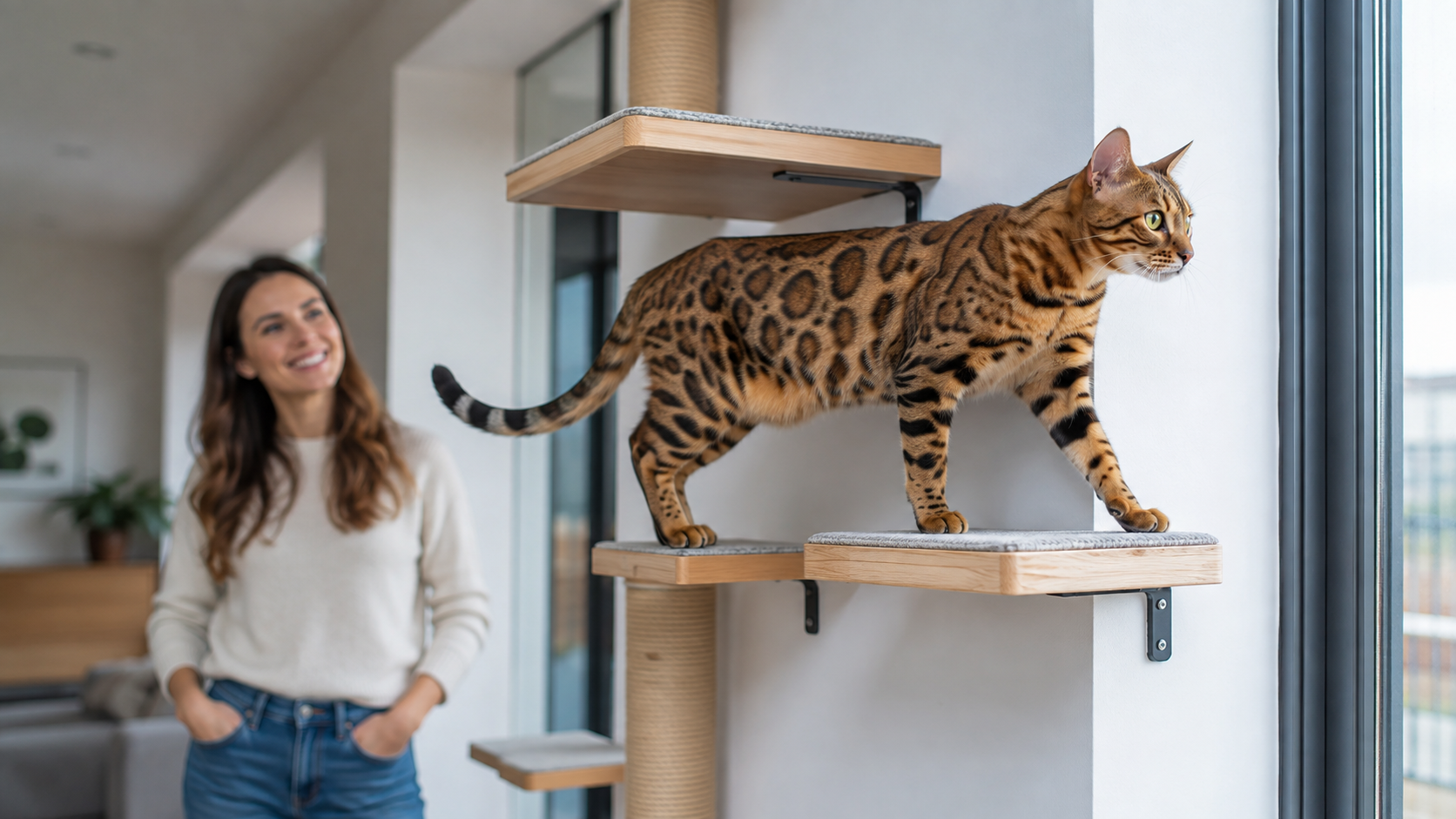


Useful Bengal cat insurance should cover both sudden injuries and illnesses that may need care across more than one policy year. A roaming cat may make a short accident waiting period especially important. For an indoor Bengal, accident cover still has a place alongside the annual veterinary-fee limit, the excess and cover for illness.
Owners often report that Bengals climb, jump, explore and escape readily, but that does not prove any individual cat will have an accident. An indoor cat, a Bengal using a secure garden and a free-roaming cat do not have identical exposures. The useful comparison is how a policy treats illness and accidents for the life the cat actually leads.
Start with the Bengal’s lifestyle
An indoor Bengal can still be injured while climbing furniture or jumping between high surfaces. Staying inside reduces road and roaming exposure, yet it does not remove accidents at home or the need to consider illness cover.
A secure garden or enclosure controls some outside hazards, although boundaries can fail. Free roaming adds more opportunities for sudden injury or escape, which can make the accident start date particularly important on a new policy. Some Bengals are only a small number of generations removed from a wild ancestor, but ancestry does not show how one cat will behave or whether it will be injured.
A 2026 veterinary rate card estimates an overnight emergency admission at £1,000 to £2,500. That is a range for veterinary charges, not promised reimbursement. Any payment remains subject to eligibility, limits, the excess and exclusions.
Check when accident and illness cover begins
UK pet insurance ordinarily includes an initial waiting period, intended to stop someone buying cover only after a problem has developed. Accident and illness can have different waits.
For accidents, Agria, Petplan and Direct Line state that cover starts on day one. Napo begins eligibility after 24 hours, ManyPets and Animal Friends after 48 hours, and Sainsbury’s Money after three days.
Illness waits are closer together. Napo states 10 days, and Agria applies a 10-day initial illness wait during the first policy year. Petplan applies a 14-day illness wait in the first policy year, while Animal Friends, ManyPets, Sainsbury’s Money and Direct Line also give 14-day examples. Waggel applies a 14-day initial wait to both accident and illness claims, so an injury occurring within those first 14 days is outside cover.
A newly insured outdoor explorer may put particular weight on a short accident wait. An indoor owner may give equal weight to the annual limit and excess. Confirm current terms before purchase because start dates and wording can change.
Keep illness cover in the comparison
Breed literature associates Bengals with hypertrophic cardiomyopathy, which affects the heart muscle, and progressive retinal atrophy, an eye disorder that can reduce sight over time. A breed association is not a diagnosis. An individual Bengal may never develop either disorder, and a veterinarian must diagnose and manage any suspected heart or eye condition.


If an eligible condition first arises after the initial wait, renewable cover can matter when care continues into another policy year. Under a lifetime structure, the annual veterinary-fee allowance is restored when the policy renews for another year. Waggel is one example, with selectable yearly limits from £1,000 to £15,000. Eligibility, exclusions and the selected limit still apply after renewal.
Work out what remains to pay
Owners still pay treatment above the annual limit, the excess on an eligible claim and anything outside cover. A per-condition excess means two unrelated conditions claimed in one policy year can produce two charges.
Compare when accident eligibility begins, whether an eligible ongoing condition can remain covered after renewal, and what the owner may still pay. Accident start dates differ more than illness waits, while a per-condition excess can apply several times for unrelated conditions in one year.
Choose cover for the cat’s actual routine
For a newly insured outdoor Bengal, check the accident start date. For an active indoor cat, compare illness cover, the annual limit and whether several conditions could trigger several excesses alongside accident cover.
Match the accident start date to the Bengal’s actual lifestyle, then compare illness cover, the annual limit and the excess rule. For treatment that could continue after renewal, check that the allowance restores and choose a limit the household could sustain alongside any excesses. The useful comparison is between those terms, not between indoor and outdoor labels alone.