




















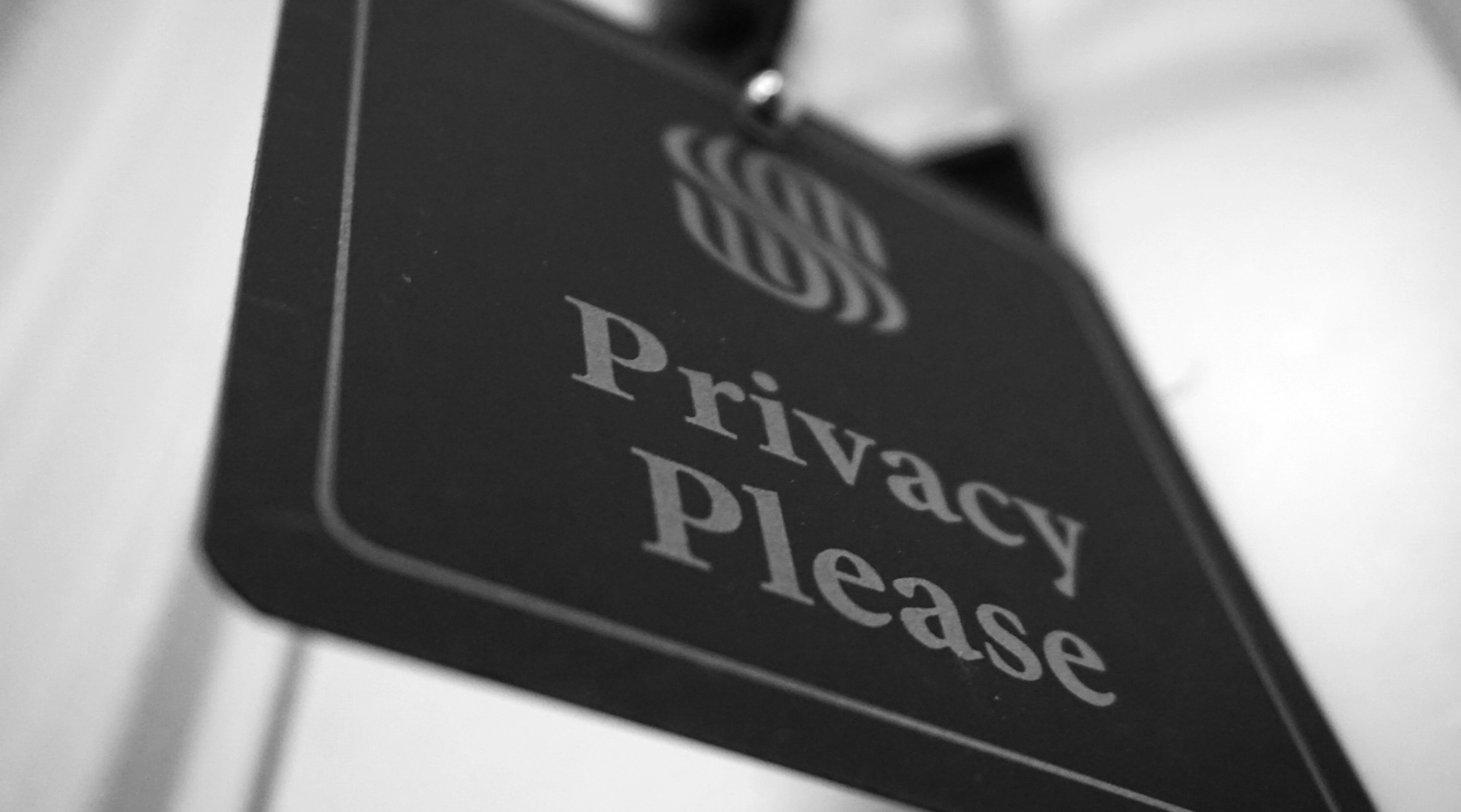


Think about an HR manager wrapping up a restructuring call behind a closed door, only for the entire corridor to catch every word, and that’s not rare. It happens because most offices never measure something called speech privacy, which basically means someone nearby can tell a conversation is going on but can’t actually understand what’s being said.
Research into speech privacy in buildings has found that 53% of employees have overheard confidential company information at work, and poor speech privacy consistently ranks as the top acoustic complaint among office workers. Most employers assume their meeting rooms are private enough, but very few have tested whether that’s actually true.
Three Factors That Decide Whether a Room Is Private
Speech privacy depends on more than just walls. There are three things that need to line up: how much noise reduction exists between two spaces, how loud the background noise is where the listener sits, and how far apart the speaker and listener are from each other. Even one weak link in that chain will let a private conversation bleed through to someone who shouldn’t be hearing it, so all three need to work together or the whole thing falls apart.
Office fit-outs almost always throw money at the first one, putting up partition walls or swapping out ceiling tiles to block sound. That does help, but a plasterboard wall rated at 45 dB of sound reduction won’t do much if the room next door is silent. What surrounds the listener matters just as much as the barrier itself, and that’s where nearly every workplace drops the ball.
Why Background Noise Is the Missing Piece
Ambient noise in a typical office sits somewhere between 30 and 40 dB, which is quiet enough that even muffled speech coming through a wall or over a partition will be perfectly clear to anyone within a few metres. The walls aren’t necessarily too thin for the job. They just can’t compensate when the other side of them is dead quiet.
Raising the background noise doesn’t mean making the office noticeably louder, though. What usually happens is that professional sound masking services introduce a tuned, engineered background sound pitched at the same frequency range as human speech, lifting the ambient level just enough to make nearby conversations unintelligible beyond a set distance. Most people in the office won’t even notice it’s there, but it fills the gap that walls and distance can’t close on their own.
Distance Only Works When You Have the Space
Distance is often the hardest variable to control in a modern UK office. Open-plan layouts, hot-desking setups, shared meeting pods, and breakout areas squeeze the gap between speaker and listener down to a point where even moderate speech carries clearly across the room. You can’t redesign a floorplate every time someone needs a private conversation, and telling people to “just move further away” isn’t a real policy when square footage is already tight.
Hard, reflective surfaces make this worse. Glass partitions and polished concrete floors bounce sound around so it travels much further than it would in a carpeted room with soft furnishings, which means a gap that looks reasonable on paper won’t actually give you the privacy you’d expect.
What This Means for Employers Who Handle Sensitive Information
Any workplace where private conversations happen daily, whether in HR, legal, finance, or healthcare, needs to take speech privacy seriously because the consequences go well beyond awkwardness. If staff can overhear disciplinary outcomes, salary figures, client data, or restructuring plans, there are real risks around compliance, employee trust, morale, and potential legal exposure.
Fixing it starts with recognising that walls and distance only cover two of the three variables. Background noise control is the one that can be precisely engineered and adjusted after a fit-out is already done, which makes it the obvious starting point for buildings that are already in use. Every workspace that handles confidential information should be measured against all three conditions, not just the ones that showed up on the architect’s drawings.