



















There are gardens you visit for beauty. And then there are places that stop you mid-step.
Visiting the Henry Moore Wakehurst exhibition feels like stepping into a different realm.
Henry Moore Wakehurst exhibition does exactly that — from the moment you arrive, the air feels different. Sounds between the ancient trees layer and shift like a natural orchestra tuning up around you. This is not a gallery. It is a living conversation between human creativity and the natural world — and it is one of the most quietly powerful artistic experiences Sussex has to offer in 2026.
The unique atmosphere of Henry Moore Wakehurst enhances every artistic encounter.
Henry Moore Wakehurst — The Exhibition
At Henry Moore Wakehurst, art and nature merge seamlessly.
Henry Moore and More brings together four iconic bronze sculptures by Henry Moore alongside UK premieres from three internationally acclaimed contemporary artists: Rana Begum, Paloma Varga Weisz, and Rafael Pérez Evans. The exhibition runs from 5 June 2026 to 23 May 2027 — giving it the full arc of seasons across the Sussex landscape.
The Henry Moore Wakehurst event highlights the evolution of landscape art.
That duration matters. These works will read entirely differently in autumn light, in winter stillness, in the full green of next spring. Wakehurst has given the exhibition time as well as space.
Henry Moore: Forms That Belong to the Earth
Relief No. 1, 1959 rises from the Sussex landscape with the unhurried authority of something geological rather than made. Its surface, weathered to a deep bronze-green, catches the light differently from every angle — rough in texture, smooth in silhouette, monumental in presence without announcing itself.
Mother and Child: Block Seat, 1983–84 is perhaps the most affecting work in the exhibition. Two forms becoming one — and what is remarkable is how bronze, a material of weight and permanence, manages here to convey warmth. The figures seem to breathe with each other. Standing before it in Wakehurst’s walled garden, surrounded by the wild Sussex green, you understand instinctively what Moore spent a lifetime trying to say: that the human form and the natural world are not separate things.


Being in the presence of Henry Moore Wakehurst allows for deep reflection.
A fellow visitor voiced what many of us were thinking: “To have that vision in your head — how do great artists even see these things?” It is the question Wakehurst quietly invites you to sit with.
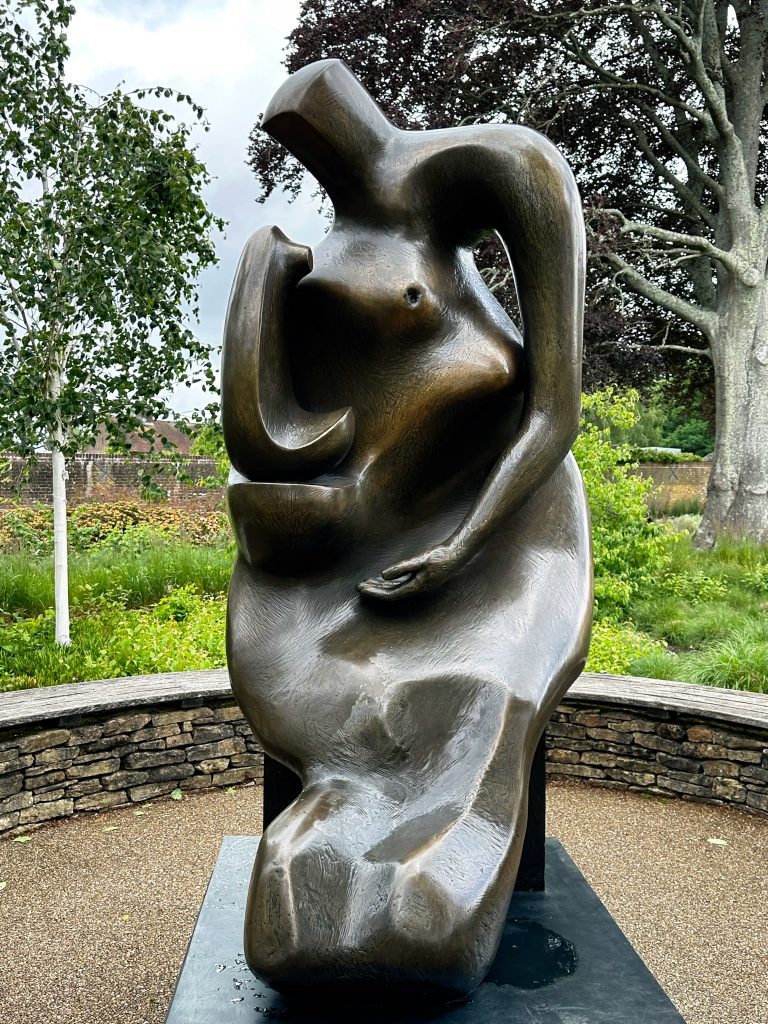
This piece exemplifies the essence of Henry Moore Wakehurst.
Rana Begum: No. 1604 Mesh
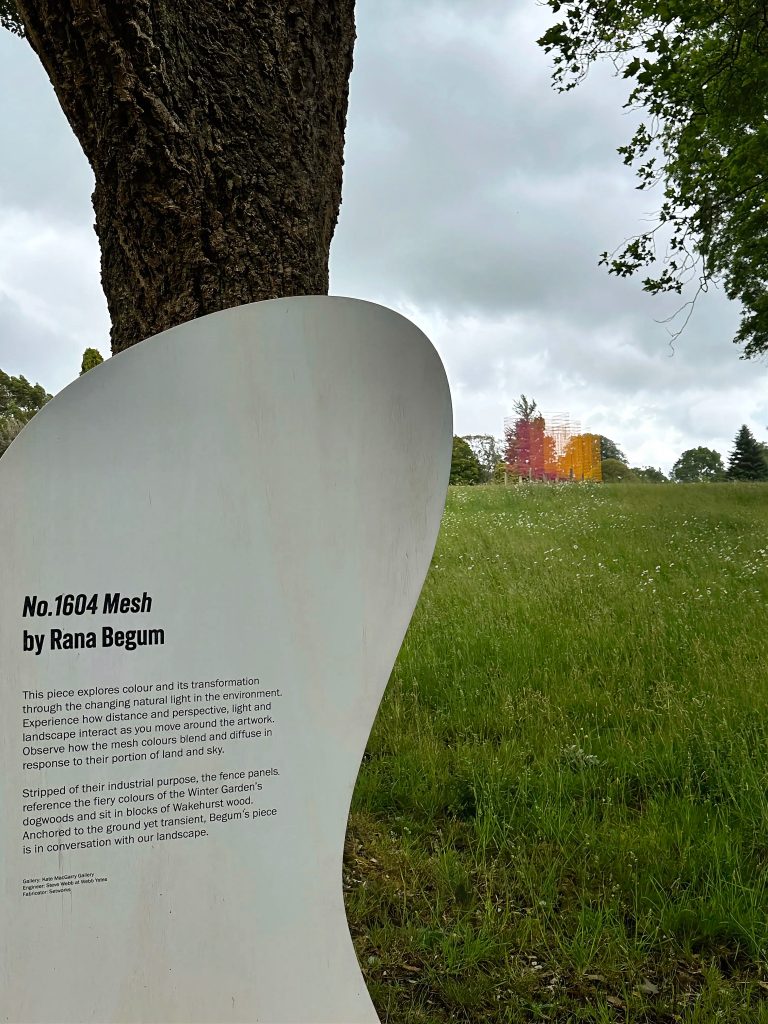
From a distance, No. 1604 Mesh appears almost like a mirage — a blazing oasis of red and orange rising from the grey-green Sussex hillside. Industrial mesh fence panels, stripped of function, now reference the fiery winter colours of Wakehurst’s dogwood trees. Anchored to the ground yet transient, the piece changes entirely as you move around it: solid from one angle, transparent from another, dissolving into the sky from a third.
The colours of Henry Moore Wakehurst transform with the seasons.
For Begum, material is never purely aesthetic — it is always a response to place. “You have to respond to the site,” she explains. “Observe how people use the space, how they move through it.” At Wakehurst, she was given creative freedom — and the result feels genuinely site-specific rather than simply placed.
Paloma Varga Weisz: Wilde Leute
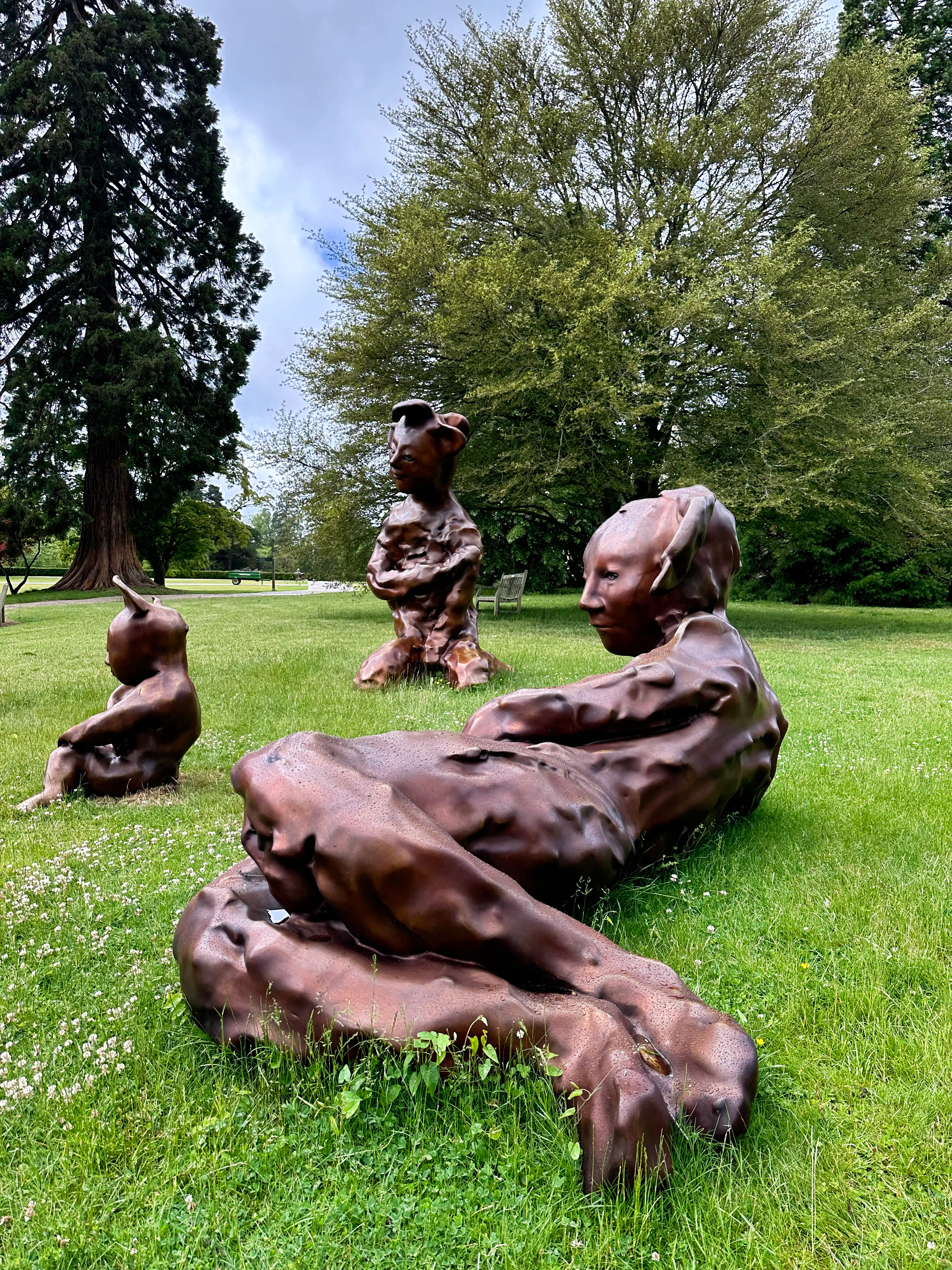
Three bronze figures emerge from the Wakehurst lawn — low to the ground, unexpectedly human, their faces turned as if they have just noticed you.
These figures at Henry Moore Wakehurst evoke a sense of belonging.
Wilde Leute (“Wild People”) is a series Varga Weisz has been developing since 1998: anthropomorphic figures inspired by medieval characters living in harmony with nature. These three sculptures have never before been shown in the United Kingdom — and there is something in their gaze that is difficult to name. Not supernatural, exactly. More like the feeling of being watched by something that belongs here more completely than you do. A calm, ancient watchfulness from another world entirely.
Rafael Pérez Evans: Horizontals 2026
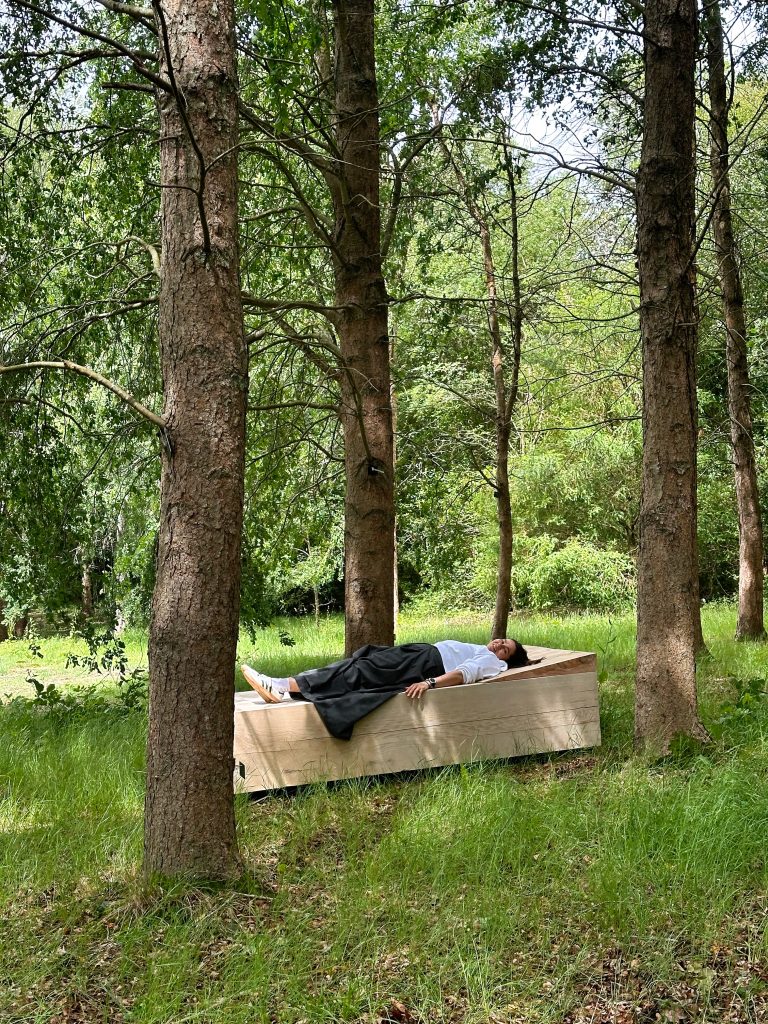
Among the trees, almost invisible until you are upon it: a low wooden platform, slightly tilted, inviting you to lie down.
Horizontals 2026 was created directly on site at Wakehurst, inspired by Moore’s reclining figures. Lie back. Look up. The canopy of ancient trees shifts and moves above you. The ground holds you. The world continues without you for a moment.
Inspired by the tranquility at Henry Moore Wakehurst, you’ll find peace.
In a culture that never stops moving, this quiet sculpture asks only one thing: pause. It is the most understated work in the exhibition and, in its way, the most generous.
More Than a Garden
But Wakehurst is more than a garden — and more than a gallery.
Engaging with art at Henry Moore Wakehurst is a transformative experience.
There is a cinema, regular events throughout the year, and a café serving food that is genuinely fresh, varied and unhurried. This is a place designed for a full day — one that earns the journey from Brighton many times over.
Somewhere between the sculptures and the ancient trees, a member of the team paused to find the right words: “The world’s wild plants are saved here.”
It is a quiet, extraordinary fact. Beneath the beauty, beneath the art, this landscape is doing something urgent and essential — conserving the wild plants of our planet for the generations that will come after us.
That is what separates Henry Moore and More from any other sculpture exhibition. The setting is not decorative. It is alive — and it matters more than most of us realise.
Only at Henry Moore Wakehurst can you see this blend of nature and art.
Practical Information
Plan your visit to Henry Moore Wakehurst for an unforgettable day.
📍 Wakehurst, Selsfield Road, Haywards Heath, West Sussex RH17 6TN
🚂 Nearest station: Haywards Heath 🌐 kew.org/wakehurst
Check for updates on events at Henry Moore Wakehurst.
📅 5 June 2026 — 23 May 2027 🎫 Included with standard Wakehurst admission
Henry Moore Wakehurst is a must-see for art lovers.
Brighton Journal attended the media preview on 4 June 2026 as an invited press guest.
For more arts and culture in Sussex, explore our Arts & Culture Brighton guide — and for more day trips from Brighton, visit Places to Visit Near Brighton. Also read our review of Henry Moore: Monumental Nature at Kew Gardens.
Discover more about Henry Moore Wakehurst through our articles.