




















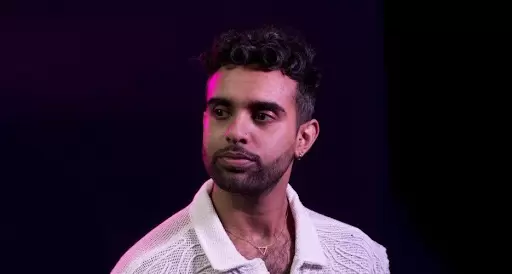


Sabah Choudrey’s community organising began in Brighton while they were studying psychology at the University of Sussex.
In 2013, Choudrey helped establish Trans Pride Brighton, the first trans Pride event of its kind in the UK. It went on to win Best Trans Event in Brighton in 2014 and 2015 and was nominated at the National Diversity Awards in 2016.
Choudrey has since spent a decade working with trans young people, co-founded Colours Youth Network and written Supporting Trans People of Colour: How to Make Your Practice Inclusive. They were included in the Diversity Power List 2024/25 and named among the Attitude 101 trailblazers in 2026.
In this interview with the Diversity & Inclusion Speakers Agency, Choudrey discusses the mistakes businesses continue to make around trans inclusion, why intersectionality matters in the workplace and how companies can support LGBTQ+ employees without falling into performative allyship.
Question 1: What misconceptions continue to shape how businesses approach trans inclusion in 2026?
Sabah Choudrey: “I think there’s a lot of misinformation about the trans community and therefore about what trans inclusion means, what it means to include us as a community, because we’re not understood.
“There are a lot of assumptions about who we are, what we do and what we need. For businesses, it creates a lot of fear about what it means to include trans people. There is fear of repercussions, especially with all the changes to the Equality Act. It builds the fear of, “We don’t know what’s happening. Does it mean this? Does it mean that?”
“The Equality Act being unclear is an issue, but businesses need to remember that trans people are also part of their company, whether they know it or not. We’re part of their following and the people they work with.
“We use their services, so it’s important to remember that trans people are also paying attention to what businesses do, how they respond to changes in legislation and how they respond to different kinds of global events. If businesses exclude us, they will lose us.
“There is also a misunderstanding that trans inclusion only affects trans people, which isn’t true. With the recent changes around the Equality Act and businesses and services excluding trans people from spaces, it’s setting up a policing of people, especially around women and women’s bodies and expression around femininity.


“There’s a lot more hostility. I’ve heard from friends who aren’t trans, who are cis women with different kinds of gender expression, and they’re receiving the same hostility as trans people.
“Trans exclusion is affecting everyone. It’s not about gender, it’s about expression, and that is something that affects us all.
“For businesses, I think it’s really important that you think about your company values, your ethos and what you stand for, and ask yourself, “Am I a business with integrity?”
“I’ve worked with companies that are figuring this out, either with me, alongside their LGBTQ staff networks or with their trans clients and members. It is as simple as saying, “These are the changes happening in the law.
“We’re not sure what it means,” or, “We’re going to try and figure this out in a way that ensures we’re sticking to our values of inclusion and accepting everyone. We’re standing by you and we’re not going to react. We’re going to pause and respond intentionally.””
Question 2: Why has intersectionality become essential for organisations seeking to build genuinely diverse workplaces?
Sabah Choudrey: “Diversity is better for business. That is a fact. There are many reasons why.
“There are increased opportunities for learning around diversity because you create a chance for people to be creative and innovative. You have people from different backgrounds and different lived experiences. You’re going to get different and unique perspectives around problem-solving and different ideas.
“Another reason is that you create a more inclusive and safe environment for people to speak their minds and feel safe. Feeling safe at work is really important. I think it gets overlooked a lot, but when you feel safe at work, you trust your colleagues and you trust in the workplace.
“That’s important, especially when there are changes at work or any kind of uncertainty. That safety and trust are important for creating a better workplace and for your colleagues and staff to feel like they belong and have a place there.
“Belonging is another reason. Feeling like you belong somewhere is hugely important. I say that as someone who feels really lucky to be part of trans communities and the South Asian queer community because I have a feeling I belong. I don’t think everyone really gets that.
“I feel like workplaces can do much more to make people feel like they belong. It’s not just about tick boxes. It’s about showing that we see you as more than who you show up as at work or what your job title is. This is actually a place for you.
“These things are overlooked by companies and businesses. Safety, belonging and inclusion are important.”
Question 3: What practical steps can companies take to support LGBTQ+ employees while avoiding performative allyship?
Sabah Choudrey: “If a company is asking how to support LGBTQ employees without it looking like performative allyship, I think that’s already solving the problem. There’s an awareness of what we are doing, how it could come across and how it could impact LGBTQ staff. That is the first step.
“I wrote about this in my book, Supporting Trans People of Colour: How to Make Your Practice Inclusive. I have a few questions that are helpful when doing an action or taking part in a campaign to figure out whether this is falling into performative allyship or not being genuine or helpful.
“The first question to ask yourself is: what is the intention when taking part in an action or campaign? That answer will help you shape what the campaign looks like and who it’s for. You’ll know if you’re taking part just to look like an ally without doing the work of being an ally.
“The next question is: who is taking part? You need to take note of the people leading that campaign and who is the driving force behind it. Actions need to be led by the people they affect and represent, and driven by people with that lived experience. Do it with LGBTQ staff and your ERGs. Don’t do it alone.
“The next question is: what does the community need? If you have reflected on your intentions and have the LGBTQ network leading a campaign, go back to consultation and make sure you have asked directly and explicitly. The trans community will always know what the trans community needs. Ask.
“The next thing is to ask: what can we actually do for the community? What is part of my resource? What is part of my power to do something for the community?
“Understanding your privilege is a great prerequisite to this question. It’s about knowing the true influence and capacity that we have on an organisational level and an individual level.
“The last question is: what are we prepared to do next?
“Intentions matter and speak volumes, but actions are louder. A campaign needs to be more than taking part. Our community exists beyond one day, one week or a month of awareness raising. A community is going to need you beyond that, too.”
Question 4: What lasting shift in perspective do you want audiences to take from your public speaking?
Sabah Choudrey: “It’s a hard question to answer because, when I’m working with companies, that’s the question I’m asking them. I say, “What is it that you want your audience to take away from hearing me speak?” I want it to be useful and applicable to them and what’s happening in their environment.
“The most predominant answer I get is for people to hear a different experience and understand that trans people exist, that you can be trans and Muslim and queer and South Asian and have all these intersections.
“That matches what I’m personally trying to do. I want to offer that different perspective.
“I like to set up a short agreement when I do talks, so everyone feels comfortable and knows what to expect. One of the things I say is to be open-minded.
“What I mean by that is not to change your mind. I’m not necessarily trying to change your mind. I’m not going to tell you what to think.
“What I mean by an open mind is to be open to changing your mind. If you have one particular belief or opinion and you’re open to changing that from what you hear, that’s all. If you leave with the same opinion, that’s also okay.
“I want people to be open to hearing that different perspectives exist. I want to offer something that makes other people think.”
This exclusive interview with Sabah Choudrey was conducted by Tabish Ali of the Motivational Speakers Agency.