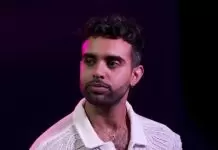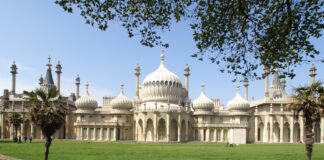


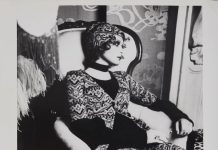

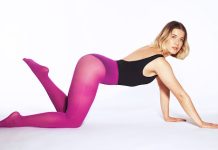












For this weeks artist, we had the pleasure of speaking to photographer Mia Carey about her latest project on motherhood. She has been taking photos of single mothers and their only children, a daughter, in the Brighton area.
All images in this article
© Mia Carey
Mia may be just in her final year at University, but her raw insight into the relationship between womanhood and motherhood is phenomenal. Her images encapsulate the power of mother-daughter relationships and are full of emotional and intellectual maturity. Mia manages to profoundly comment on single mother-daughter relationships in general, whilst also offering her audience the opportunity to see what it may be like to be a part of this two-person bond.

Tell us about the project that you are currently working on?
“I’ve been working on my final year photographic series Dyad, since October now. When I began this project, I knew I wanted to focus on the idea of ‘mother’, and having had a single mother myself, I wanted to work with women that had brought up children alone. I began speaking to some single mothers that had contacted me about my project, through a local Facebook group, but I felt as if something was still missing from what I wanted to say. My mother had just myself and I had just her and I realised that what I really wanted to explore was the dynamic that me and my mother share and so I began my search to find other mother/daughter family units of a similar nature.”
“Dyad has become not just an exploration of motherhood but of womanhood as well, through a series of portraits taken within the homes of my subjects.”

“I haven’t exactly allowed my subjects to present themselves to the camera how they’ve necessarily wanted, but of course, little hints of their personality and of their relationship often trickle through.”
“I have tried to avoid cliche poses that are often associated with family portraits and approached the project with a more deadpan outcome. One of the reasons behind this creative decision was that this project has made me really question the medium of photography and consider what a single portrait can and can’t do.”
“A portrait is a collaborative process, the people in front of the camera offer something, I offer something and then the audience then offers something to their interpretation of the work. It’s all in selection of an image, two of the photographs I’ve taken that may of been taken seconds apart can suggest two completely different things.”
“The notion that a individuals portrait reveals some part of the sitters soul, well I just don’t believe that to be true. So many things can be hinted at in a photograph but these are manifested by a number of influences.”
What motivated you to begin this project?
“My personal work tends to involve a subject matter that I’m really invested in or that I can directly relate to – in the hope that others can too. This forms a big part of my motivation to carry out a project, as well being able to strike up a conversation about the thing I have chosen to shine the light on.”
“Since beginning Dyad, numerous amounts of people have spoken to me about it. Either wanting to be involved because they too have had just their mother, or simply asking what it’s been like being in such a small and perhaps ‘intense’ family unit.”
“I wanted to give space to single mothers, who are still constantly persecuted within society, but also of single children.”
“Only children are notoriously given an array of bad labels, such as spoilt and childish, and I obviously find both these types of comments attached to those outside the ‘nuclear family’ as offensive and hugely incorrect. But of course, that’s just my personal opinion and won’t try to deny that my experience doesn’t shape the images that I create as a response to how I feel about my chosen topic.”



What would you like people to notice about Dyad?
“I would love people to be able to see the amount of time and love I have invested into my work. I hope that my imagery reflects the hours that I have spent talking to both the mothers and daughters that I have photographed, as well as how much I care about presenting this dynamic to the world. Although uncommon, being just a mother a daughter without any other immediate family members isn’t exactly rare either and I know from my personal experience, it felt quite isolating being one of only a few only children that I knew, let alone having just one parent too and I’m sure my mum struggled with her own issues of this nature too. Overall, I think I’d just like people to appreciate both members of this mother/daughter party.”
What attracts you to the medium you work in?
“Well, photography as a whole… Ah, I just love it. I enjoy obeying (or disobeying) to the constraints that this medium puts into practice and I also like that fact that people naturally absorb a photograph as if it’s the truth, although it is becoming more widely recognised that this isn’t exactly true. I work predominantly on analogue so obviously this brings another component into my practice. It has been said a hundred times before by other photographers who work on film, but it really does slow you down and make you consider what and why you had decided to point your camera at a given thing and pausing like this, I find, really beneficial.”

What equipment could you not do without?
“Well… There are several components that work together to form my practice and I don’t think I could really sacrifice any of them! As a discipline, photography tends to demand a lot of equipment and working on analogue ensures the need for a whole other range of equipment. In terms of a camera, I’ve shot Dyad on a Mamiya RZ and it’s my favourite camera to use, so that’s what I would pick if I had to choose”.
Who or what inspires your work?
“In terms of my photography, my peers probably inspire me the most. My course mates form a really strong year, there is a lot of strong female characters within the group which I just love being surrounded by, and a lot of really amazing work has been made during our time at university. It’s hard not to compare your work to others and I have succumbed to getting down about it in the past but overall, I love engaging with other people’s imagery and being able to watch a body of work develop and take form is a huge privilege and this is what I find truly inspiring.”

What made you decide to become an artist?
“I basically realised that photography made me really happy. Printing pictures in the darkroom was the first thing that drew me in, which (of course) I haven’t really done in years now, but it was when I began to actually learn about photography, the technical side of it and of the theoretical aspects that people implicate within their practice that I knew it was what I want to pursue. To create work that hopefully others would enjoy and relate to in some way, shape or form.”

Mia will be exhibiting this body of work at her degree show entitled Loophole from the 20th – 25th of June at Free Range at The Old Truman Brewery.
You can contact her via email: [email protected]
Mia is on Instagram: @miacareyphoto
She also has a website, the link is available here
The Brighton Journal does a weekly feature ‘Artist of the Week’, the link is available here