


















Brighton and Hove’s 13km beachfront is getting its most ambitious makeover in a generation. The city council has published a formal prospectus setting out how it intends to transform the waterfront — balancing tourism, arts, climate resilience and the needs of residents who use the seafront year-round.
The plans come from the Seafront Development Board and build on projects already under way. But the scale of ambition goes well beyond anything currently in progress.
A Landmark Gallery at Black Rock
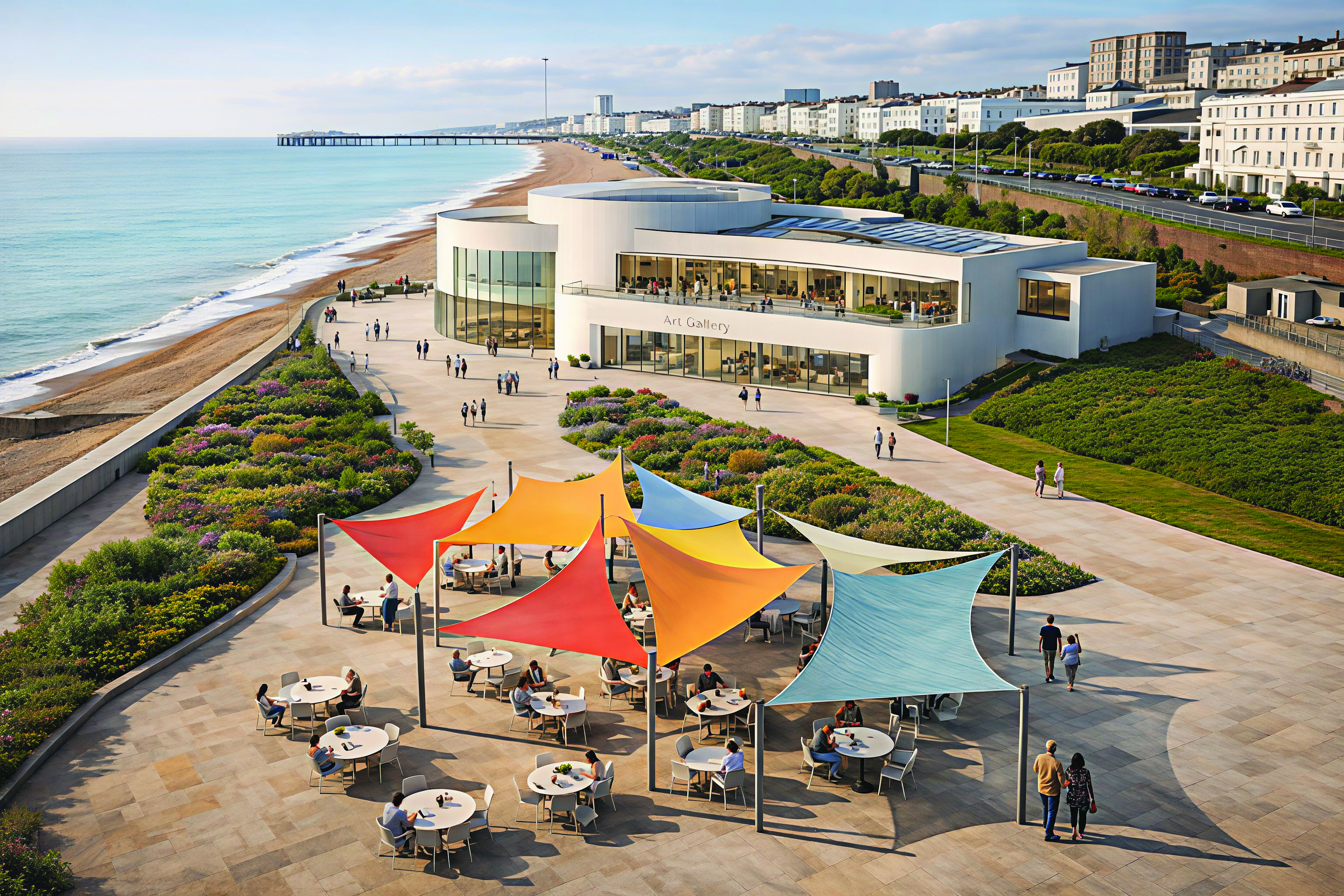
The most eye-catching proposal is a major cultural venue at Black Rock, just west of Brighton Marina. The council is floating the idea of a landmark modern art gallery capable of drawing visitors throughout the year — not just in summer. The aim is to position Brighton alongside the UK’s leading cultural destinations, giving the city a draw that works in February as much as August.
It’s a significant bet. Cultural venues of this kind require substantial long-term investment and the right operator to make them work. But the logic is sound. Brighton’s arts and culture scene is already one of its strongest economic assets. A permanent, architecturally significant gallery at Black Rock would give that sector an anchor it currently lacks.
What’s Already in Motion
The prospectus doesn’t start from scratch. Several schemes are already under way that the new plans build upon. Hove Beach Park is taking shape. The restoration of the Madeira Terrace — one of the most significant heritage projects on the seafront — continues. Active travel improvements are also in progress along the route.
Taken together, these projects signal that the council is committed to sustained investment in the waterfront rather than a single headline scheme. The prospectus frames them as connected parts of a coherent long-term strategy rather than isolated interventions.
What the Council Says
Council leader Bella Sankey described the seafront as one of Brighton’s “most cherished assets” and said the prospectus laid out how long-term management would bring together “values of inclusivity, sustainability and place.”


Seafront Development Board chairman Lord Bassam put the economic case plainly. “This is about creating new opportunities for local talent to develop, with jobs and employment in Brighton and Hove’s fastest growing sector — the arts, culture, hospitality.”
Council deputy leader Jacob Taylor was more expansive. “We have a chance to create the most iconic and spectacular stretch of coastline in the whole country — with arts, attractions, leisure, and natural shorefront to rival the best seaside resorts in Europe.”
That’s a bold claim. Europe’s leading coastal destinations — San Sebastián, Nice, Scheveningen — combine strong year-round economies with serious cultural infrastructure. Brighton has the bones. The seafront prospectus is the council’s attempt to provide the framework.
The Pressures Driving the Plan
The prospectus is not just about opportunity. It is also a response to real pressures. The seafront infrastructure is ageing. Climate change is increasing the risk of coastal erosion and storm damage. And the city has to find a way to balance conservation — the seafront contains protected heritage assets — with the demands of a growing, modern city.
Those tensions are not new. What is new is the council setting out, in a published document, how it intends to navigate them over the long term. The prospectus is a signal of intent as much as a delivery plan.
What Comes Next
The council has published the prospectus. The harder work — securing investment partners, planning consents, and the community support needed to deliver schemes of this scale — comes next. The Black Rock gallery, in particular, will require a significant funding package and the identification of the right operator before it moves from concept to construction.
Brighton’s seafront has always been the city’s most visible asset. The question the prospectus raises is whether it can become its most economically productive one too.
The full seafront prospectus is available on the Brighton & Hove City Council website.