
























Brighton’s relationship with casino entertainment is evolving. As the city’s physical gaming scene contracts, online operators are competing for the same customers through convenience, technology and a constant stream of new promotions.
Brighton has never struggled to offer people a night out. From the clubs and bars of the seafront to the theatres, restaurants and independent venues around the city centre, entertainment has long been part of its identity.
Casinos have occupied their own place within that landscape. They offer something that sits between nightlife, hospitality and gaming: a setting where visitors can play at a live table, meet friends, have a meal or simply include the casino as one stop during an evening in the city.
But Brighton’s casino scene is changing.
The closure of Rendezvous Casino at Brighton Marina in March 2025, while its operator reviewed the venue’s long-term financial viability, removed one of the city’s most recognisable casino destinations from the local entertainment map. The venue had been part of the marina for more than two decades, combining gaming with dining, events and waterfront surroundings.
Its closure also raised a wider question. In a city with an active nightlife economy and a large population of digitally connected residents, what role will traditional casinos play as more gambling activity moves online?
A Smaller Physical Casino Scene
Two established casino venues remain prominent in central Brighton.
Grosvenor Casino Brighton, located on Grand Junction Road opposite the Palace Pier, benefits from one of the city’s most visible entertainment locations. Its Pier Nine complex combines live gaming tables, poker, electronic gaming, food and views of the seafront.
Genting Casino Brighton operates from Preston Street, close to the beach and the city’s central nightlife. It offers roulette, blackjack, three-card poker, electronic tables and slot machines in a smaller city-centre setting.


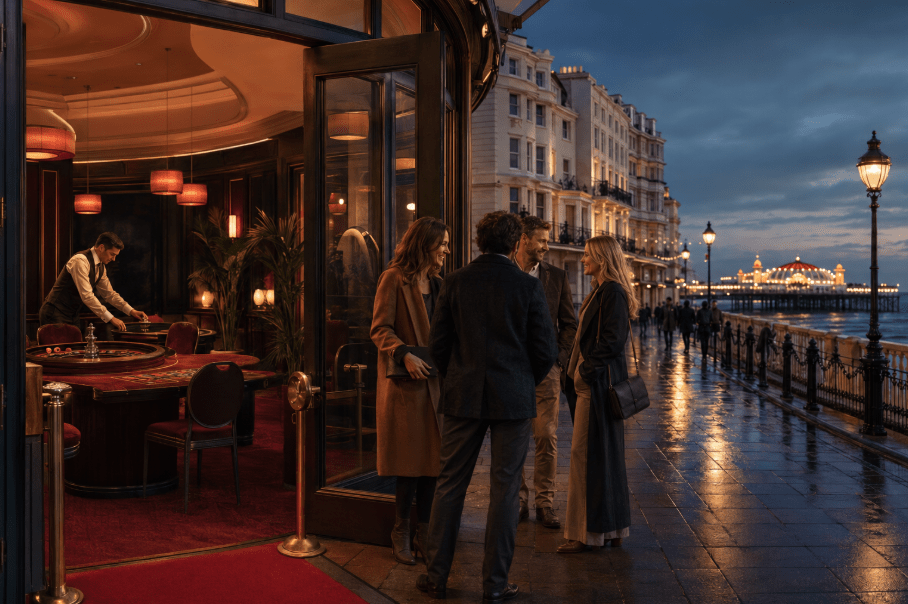
Both venues illustrate why physical casinos continue to have value even when almost every major casino game can be accessed through a phone or laptop.
A land-based casino is not simply a collection of games. The interaction with dealers, the atmosphere around a table and the ability to combine gaming with food, drinks and a wider night out are all difficult to reproduce online.
For visitors to Brighton, a casino can also form part of a broader leisure trip. Its location matters. A venue near the pier, restaurants or nightlife can benefit from people who did not necessarily travel to the city solely to gamble.
However, physical venues also carry considerable operating costs. They need suitable premises, trained staff, security, gaming equipment and hospitality services. They must attract enough visitors throughout the week, not only during busy weekends and holiday periods.
Online casinos work according to a very different model.
Casino Competition Has Moved onto the Screen
The growth of mobile gambling means Brighton residents no longer need to visit a dedicated venue to access slots, roulette, blackjack or live-dealer games.
A mobile casino is available at home and at any time permitted by the operator. There is no journey, dress expectation or need to organise an entire evening around the experience. Registration and deposits can be completed digitally, while live streaming attempts to reproduce some of the interaction associated with physical casino tables.
Convenience is therefore one of the strongest advantages held by online operators. But it also creates a new problem for them: intense competition.
Many online casinos offer games from the same major software studios. Customers may find familiar slots, live tables and game formats across numerous licensed platforms. If the underlying games are similar, operators need other ways to stand out.
Website performance, payment options, withdrawal processes, customer service and safer-gambling controls all influence the customer experience. Promotions have also become an increasingly visible point of difference.
The competition that once took place primarily between venues now takes place every time a customer opens a browser or checks a mobile phone.
Why Promotions Change Every Day
The traditional welcome bonus remains an important method of attracting new customers, but it has a limited role. Once the initial promotion has been used, the casino must find new reasons for the player to return.
This has encouraged operators to move towards a continuous schedule of promotions rather than relying on one large sign-up offer.
Free spins may be attached to a particular game for a limited period. Cashback can be offered on selected days. Casinos may run tournaments, prize drops, deposit promotions or loyalty campaigns that change throughout the week.
These offers are not only designed to attract new registrations. They are also intended to keep existing customers engaged in a market where another operator is always able to present an alternative.
Competition also extends to the way online casinos encourage new customers to try their platforms. Some operators offer no-deposit promotions, providing eligible players with a limited amount of bonus credit or free spins without requiring an initial deposit.
Listings of no-deposit casino bonuses show the different forms these introductory offers can take. However, no-deposit does not mean that an offer has no conditions: eligibility restrictions, wagering requirements, expiry periods and maximum withdrawal limits may still apply. Customers should therefore consider the full terms rather than judging a promotion by its headline alone.
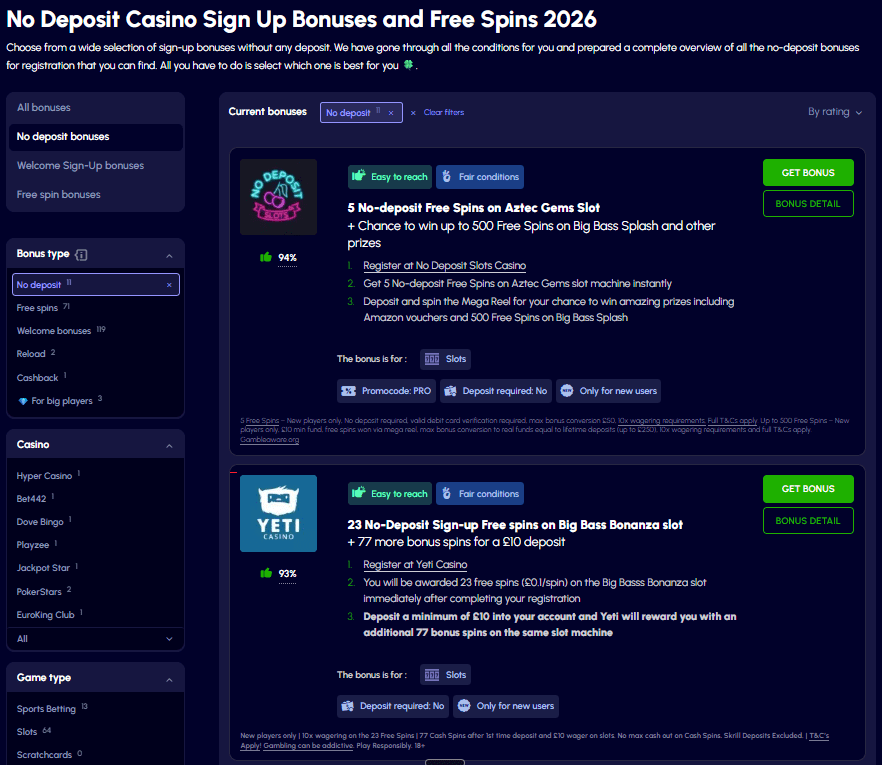
For customers, however, the largest advertised reward is not necessarily the most useful one. The practical value of a promotion depends on its conditions, including eligibility, minimum deposits, expiry periods, eligible games and any wagering requirement.
This means online casinos are competing on clarity as well as headline value.
Stricter Rules Are Reshaping Online Offers
The regulatory environment for online casino promotions has also changed.
Since January 2026, Gambling Commission rules have limited bonus wagering requirements to ten times the bonus amount. A £10 bonus, for example, cannot require more than £100 of wagering before associated funds can be withdrawn.
The regulator has also prohibited mixed-product promotions that require customers to participate in more than one type of gambling, such as combining sports betting and online slots within the same qualifying offer.
These measures are intended to make promotions simpler and reduce the risk of customers being encouraged to gamble across products they would not otherwise have chosen.
At the same time, Remote Gaming Duty increased from 21 per cent to 40 per cent in April 2026. Online casino operators must therefore compete for customers while absorbing a substantially higher tax on their remote gaming profits.
The combination of higher costs and stricter bonus rules is likely to make promotional strategy more important, not less. Operators cannot rely as heavily on complicated wagering conditions, and the cost of an unsuccessful campaign is more difficult to ignore.
Daily promotions must attract attention while remaining commercially sustainable, clearly explained and compliant with regulatory requirements.
Physical and Online Casinos Offer Different Experiences
It would be too simple to describe online casinos as a direct replacement for Brighton’s traditional venues.
The two formats often serve different occasions.
Someone planning a night out with friends may value the atmosphere of a live casino, its location and the opportunity to combine gaming with food or entertainment. A customer playing online may instead be looking for convenience, a broader selection of games or a shorter experience at home.
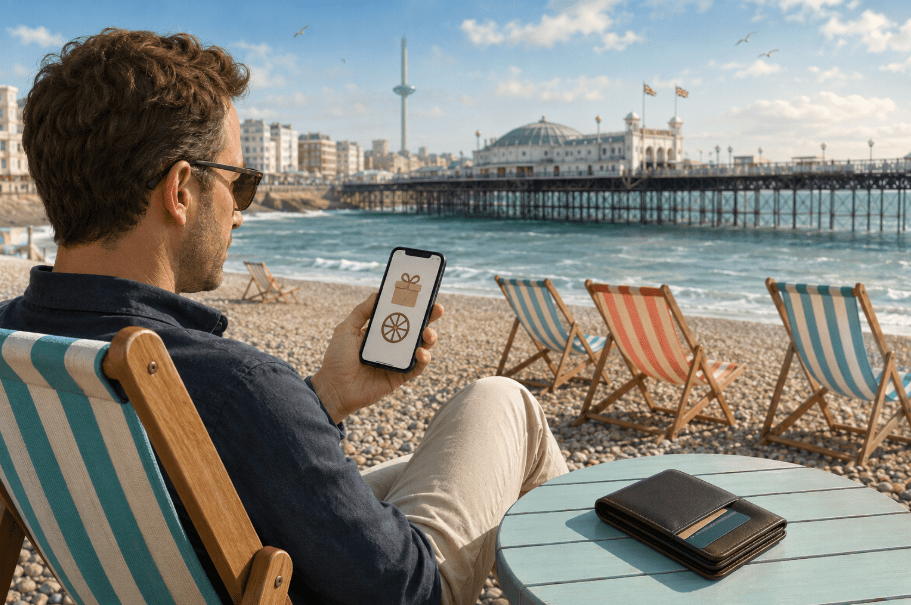
Physical casinos can compete by emphasising the qualities that cannot be downloaded: personal service, live interaction and a sense of place.
Brighton is particularly well positioned to support this kind of experience. Its visitor economy, compact city centre and established nightlife give entertainment venues access to both residents and tourists.
Online casinos compete differently. They are available continuously and can alter their promotions much faster than a physical venue can redesign its overall offering. Their challenge is not availability but loyalty.
When customers can move between platforms with relatively little effort, each operator must repeatedly demonstrate why it deserves their attention.
What Comes Next for Casino Entertainment in Brighton?
The changing casino landscape reflects a wider transformation taking place across British leisure and entertainment.
Physical venues are under pressure to provide more than access to games. They must become destinations offering hospitality, atmosphere and social value. Online casinos, meanwhile, must compete in an overcrowded digital market while meeting stricter regulatory requirements and carrying a higher tax burden.
For Brighton, the result is likely to be a smaller but more experience-focused land-based casino scene existing alongside a much larger online market.
The closure at Brighton Marina demonstrated that even an established venue in a major leisure location cannot take its future for granted. Grosvenor and Genting now operate in a market where their competitors are not limited to businesses within walking distance. They also compete, indirectly, with every licensed casino available through a mobile screen.
Online operators face their own version of the same problem. Having a website and a familiar selection of games is no longer enough. They need to remain relevant through service, technology, trust and promotions that may change from one day to the next.
Brighton’s casino culture has not disappeared. It has expanded beyond the casino floor.
The next stage of competition will take place both under the lights of the seafront and on the screens people carry in their pockets.