

















Most of us have learned to live with that tension that settles between the shoulder blades after a long week at the desk. The low-grade fatigue that a weekend never quite shifts. The ache that arrives without a clear cause and stays without a clear exit. We call it stress. We call it getting older. We call it life.
Barbara Palloni calls it the body trying to communicate, and not being heard.
For more than two decades Barbara, an holistic wellness practitioner and bodyworker, has been helping people decode what their bodies have been trying to say.
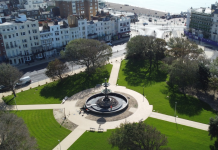
Her clinic, the Brighton Wellbeing Clinic on Oxford Street in Brighton, sits quietly between London Road and The Level, and it tends to become a place they return to.
A Story That Starts With Loss
Barbara’s path into wellness didn’t begin with a qualification or a course prospectus. It began with grief.
“For years, I lived with chronic pain, hormonal imbalances, and emotional strain,” she says. The real turning point came with the sudden loss of her father, who died at just 60 from liver collapse. His final words “Live for me, and for yourself” became, as she puts it, “the spark that lit the path forward.“
What followed was a years-long obsession with a single question: how do we actually repair and regenerate the body? “At our core, we are a community of cells,” she explains. “Every symptom, every imbalance, begins at the root of our composition.“
In 2014, she founded Brighton Wellbeing in her father’s honour. The clinic she runs today is, in many ways, the answer she spent two decades searching for.
Beyond the Standard Massage


Walking into the Brighton Wellbeing Clinic, you notice straight away that it isn’t trying to be a spa. The treatment rooms are calm and carefully designed: soft lighting, ambient sound, nothing jarring. The approach inside them is distinctly clinical in its intention, even when it feels deeply restorative.
Barbara’s work is built around what she calls the Vital Reset™ Method, a signature framework she developed over her 22 years of practice. It combines slow therapeutic massage with breath-aware technique and nervous-system informed bodywork, a way of working that she describes as going beyond what a standard massage can achieve.
The distinction matters to her. “A regular massage relaxes the muscles,” she explains. “But the Vital Reset™ approach works with the fascia, the nervous system, the breath, and the whole architecture of how the body holds itself. When you address those layers together, the release is different. Deeper. More lasting.“
Every session begins with a short consultation, so that the treatment can respond to what the body actually needs that day, rather than following a fixed script. It is, she says, the difference between a treatment and a genuine therapeutic encounter.
Three Brains, One Method
Central to Barbara’s thinking is an idea that might sound unusual until she explains it: that we have not one brain, but three. The mind, the heart, and the gut, each with its own nervous system, each capable of holding stress, trauma, and unprocessed experience.
“When people come to me exhausted or in pain, it’s rarely just one thing,” she says. “The body stores what the mind hasn’t processed. The gut reflects what the nervous system is carrying. You can’t treat one without the others.“
This “3 Brains Method” shapes everything at the clinic, from the bodywork itself to the broader health coaching she offers to longer-term clients. It also explains why the clinic’s services extend well beyond massage.
Barbara works with advanced testing (microbiome analysis, DNA profiling, toxin assessment) to identify imbalances that hands-on treatment alone might miss.
She integrates what she calls cellular regenerative glycans, nutraceutical compounds she encountered through years of research and now considers a core part of the method. And for clients who want to take the work home with them, there is the Vital Reset Academy: short, guided courses designed to reduce pain and calm the nervous system through daily practice.
It is, by most measures, a more ambitious offering than the word “massage” might suggest.
The People Who Come to The Brighton Wellbeing Clinic in Oxford Street, Brighton
Ask Barbara who she sees in her treatment rooms and the answer is varied, but a few patterns emerge. Busy professionals and entrepreneurs feature heavily: people running businesses who have reached a point where performance is costing them more than it’s returning. “Running a business can take everything out of you,” she says. “I see people who have pushed through for so long that their nervous system has forgotten how to come down.“
She also works with people living with chronic pain, conditions that conventional routes have struggled to resolve, and with expectant mothers seeking gentle, specialist-adapted care during pregnancy. And there are those in recovery from illness, for whom the usual pace of healing has felt too slow, too passive, too disconnected from how their body actually functions.
What they tend to have in common, she says, is that they have stopped trusting their body. They have learned to override its signals rather than listen to them. Part of what the clinic offers is the experience of being listened to.
Why Brighton
It would be easy to open a wellness clinic in almost any British city and fill a diary. So why Brighton?
Barbara has been here long enough to understand the city’s particular contradictions. It is a place that cultivates freedom, creativity, and independence, and those same qualities can make it hard to ask for help.
Brighton attracts people who want to live differently, but the pace of that life still takes its toll. The cafe culture, the seafront runs, the festival calendar, none of it fully cancels out the accumulated weight of overwork, unprocessed stress, and bodies that aren’t getting what they need.
“Brighton is a city that values wellbeing in principle,” she says. “But in practice, a lot of people here are running on empty and calling it fine.“
The clinic’s location (accessible, central, tucked away from the bustle) feels deliberate. As does the fact that Barbara has spent over two decades building something that asks people to slow down in a city that is constitutionally reluctant to do so.
What She Is Building Next
Over 200 five-star reviews. Thousands of clients. Recognition by Brighton & Hove News for her work in raising awareness of holistic therapies. Clients including public figures and performers. These are the numbers and names that appear on the website, and they are real. But when you ask Barbara what she is actually building, the answer is less about scale and more about shift.
She wants, she says, to change the conversation about what massage is for, to move it from luxury to necessity, from treat to tool. The Vital Reset is part of that: a way of extending the work beyond the treatment room so that clients can sustain their own progress. The wellbeing events the clinic runs are part of it too.
“True health is not the absence of illness,” she says. “It is the presence of energy, balance, and joy.” It is the kind of line that could sound like a poster slogan. From someone who built her method in response to her father’s death and her own years of physical struggle, it lands rather differently.
Brighton Wellbeing Clinic is at 17 Oxford Street in Brighton, appointments can be booked via the Massage Brighton Wellbeing Clinic website.