
















As I sat in the Post House in the Laines, two coffees down, I could never have predicted how this meeting would go. The young woman in front of me began by describing the events that occurred on the 23rd of February 2022. A day she will never forget.
This is the story of Anastasia Petrenko, a 22-year-old Ukrainian refugee who was brave enough to open up to me about the horrific accounts of her escape. She told me about her experiences before the war and how her life and perspective changed while fleeing.
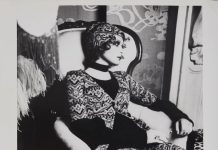
 Anastasia (pictured), who goes by Anna, fled Kyiv in February to seek safety from the conflict in Ukraine. Before Russian troops invaded her country, Anna lived an average life and dreamed of becoming an actress. After completing her drama studies at university, she roamed Kyiv “looking…just looking for something, but I didn’t know what.”
She lived with sixteen people in a giant flat with “four people in one room” who felt like strangers. When asked about her mental state back then, she was depressed enough before any conflict. In her words: “I destroyed my own life. I was lazy. I was lonely mentally. Here, I have support. There, I had nothing.”
Anna continued: “It was cold. It was lonely. You try to be happy, but you’re lying to yourself that you’re happy.” She explained how her deteriorating mental state led to her flatmates kicking her out. Little did she know, things were going to take a turn for the worse.
When questioned about the situation in her country, she hadn’t much to say politically. However, she expressed her disdain and confusion. She said: “What is going on right now? People are dying. People are losing their lives, homes, family, and future. Hell, even their cats. I can’t tell you why it is happening. I lost everything.”
A short while later, she explained her thoughts on the Ukrainians’ principles of independence. She said: “The people don’t want to be part of Russia – we are two different countries with different cultures. We are an independent country.” Anna clarified that language and culture are two separate ideologies and should be treated accordingly.
A recent BBC article by Paul Kirby presents Putin’s propagandised goals for invasion to “demilitarise and de-nazify Ukraine” attempting to “protect people subjected to eight years of bullying and genocide by Ukraine’s government”.
Conversely, Ukrainian foreign minister Dmytro Kuleba stated: “Sometimes not even they can explain what they are referring to” due to there being no evidence found of supposed bullying or genocide.
I continued the interview by asking Anna what happened on the first day. She relayed the feeling to waking up and realising you’re late for school. She said: “You wake up, but it’s your friends, not your family.” She initially thought it was a joke until the walls and ground began to vigorously shake. Not knowing what was happening, she ran to the kitchen window. Outside she saw people carrying bags by the masses, queues of cars leading up to the petrol station and complete and utter chaos. As explosive crashes shook the walls of her house, she stood frozen, not knowing what to do.


Anna claimed one of her first thoughts was, “do I have to text my boss to say I can’t make it to work in the morning?” The large group of flatmates were sitting in the living room, trying to formulate a plan before the first siren, signalling the start of the war, boomed throughout Kyiv. After the first siren, nothing was the same.
“From the first siren, reality changed. My first question was: ‘really?’ Is God punishing me?” Anna and her flatmates quickly gathered the survival essentials before leaving to seek shelter nearby. This was when she stopped feeling. She said: “Everything was empty. I’m just crying.”
Anna recalls the threat of an invasion being publicised, but she questioned the reality of these claims. She never thought it was serious until it was. Another siren signalled that citizens must go into hiding, and the flat sought refuge in the now-defunct metro tunnel a few kilometres from their home.
Explaining the emotions running through her mind, she said: “You smoke cigarettes to pass the time. You look at the sky for fear of what’s in the sky. The morning cold, the morning coffee in a thermos in the metro. We started to text everyone; your ex, the person you hate, the guy from tinder you’ve never met before, checking in on people and sharing news.”
Just as the world seemed freed from the clutches of anxious news-watching in the pandemic, Ukraine was forced to watch for announcements once again. However, this time with greater intensity and arguably more to lose. Anna said: “We were scrolling the news constantly, for fear of missing anything. The president was constantly telling us when to take shelter or when we are safe outside.”
A few weeks went by in the metro shelter, and Anna took the first opportunity to travel to her mother’s house. It was not far from the shelter, but it was far enough in a warzone. She recalled arriving and sellotaping the windows to control the amounts of glass that could potentially scatter on the floor. Frequent visits to the underground shelter made life that much more difficult, and arguments began to arise on whether to flee Ukraine or stay the course.
Anna wanted to stay. She didn’t want to leave her country. However, it took her some time to realise that their country would never be the same and their lives would be in danger if they stayed. Factoring in her mother’s ill state of health due to recent battles with Covid, the pair had no choice but to leave.
I asked Anna about her connection to her family and how the conflict changed their relationship. She believes that the journey through Europe – one month in a car, to be exact – deepened her connection and trust with her mother. They left via Moldova, a less popular route than Poland, which saved them fifteen hours of waiting out in the vulnerable open.
However, the threat did not end there. Anna explained how she attempted to look as unattractive as possible. She said: “Soldiers are soldiers. Ukrainians speak Russian, and vice versa. You don’t know who is from where and my fear of assault or worse from a soldier forced me to present myself as a young boy with a metal rod up my sleeve.”
Anna spoke of her travelling experience as the longest month of her life. Forced to sleep in
the car due to accommodation providers purposely inflating prices, she recalls “crying and slamming the dashboard” with her mother. She said: “Unsure why we were crying, it was as if we were in survival mode. The emotions catch up eventually.”
According to Anna, the two options for travel were Greece or England. Her grandmother had moved to England long before the war and owned property as a British citizen. The decision was made on England.
You may be wondering, where is Anna now? She’s here, in Brighton and adjusting to her new life. She has a flat of her own once more and a stable job that allows her to treat herself. She is a barback at The Grand Hotel and said: “It can be stressful and busy, but I am happy there.”
I asked Anna what her plans were for the next few years, to which she replied: “I have no plans, I’m not spending time on my usual hobbies. I would like to look into 3D modelling, but for now I just want to work, drink and socialise and enjoy my time for a while.”
Anna’s story isn’t over. However, there’s a lot to learn from someone who has had to create a new life from scratch. Here we also have an example of a country doing right by those seeking refuge – welcoming a struggling individual with open arms and giving them the freedom to seek peace. My final question, dear reader, can the same be said for everyone else?