




















Nestled where Brighton meets Hove along the bustling seafront, the Statue of Peace rises gracefully above the promenade. Known officially as the Edward VII Memorial, this striking bronze figure has become a beloved symbol of harmony, civic pride, and remembrance for generations of residents and visitors alike. It’s not just a monument to a king but a living testament to the enduring values of unity and peace.
Honouring Edward VII, “The Peacemaker”
The inspiration for the Statue of Peace came in 1912, just two years after the passing of King Edward VII. His reign, though brief, was marked by efforts to foster goodwill across Europe, earning him the affectionate title “The Peacemaker.” Unlike his mother, Queen Victoria, Edward VII enjoyed spending time in Brighton and Hove, often visiting and mingling with locals.
After his death, the borough councils of Brighton and Hove decided to work together on a memorial that would celebrate his legacy. Their collaboration was significant, as the two towns had long been rivals. The fundraising campaign drew support from the community, and the resulting monument was designed to inspire hope and cooperation.
A Symbol of Peace and Unity
The unveiling of the Statue of Peace took place on October 12, 1912, with crowds gathering to witness the event. Hymns and speeches filled the air; all cantered on the theme of peace. At a time when Europe was growing increasingly tense, the statue’s message felt especially urgent and meaningful.
Artistic Details and Symbolism
Design and Craftsmanship
The artist behind the statue, Newbury Abbot Trent, was chosen from a competitive field of sculptors. His design features a winged angel, the embodiment of peace, standing atop a globe supported by dolphin-like shapes that nod to Brighton’s connection to the sea. The statue stands just over eight meters tall, crafted from bronze and set on a sturdy sandstone pedestal.
Meaningful Details


The angel holds an orb in one hand and an olive branch in the other, both classic symbols of reconciliation and hope. Around the base, bronze plaques display a portrait of Edward VII, the coats of arms for both Brighton and Hove, and a dedication to the Queen’s Nurses, reflecting the charitable spirit of the project.
Location of the Statue of Peace
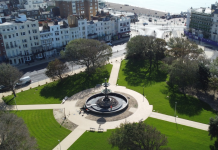
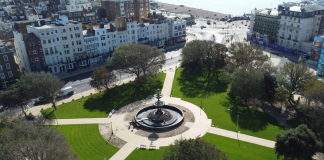
Positioned between the Brunswick Lawns and the Esplanade, the Statue of Peace marks the historic boundary between Brighton and Hove. Its prominent spot on Kingsway makes it a natural gathering place and a familiar sight for anyone strolling the seafront.
A Witness to History
Over the decades, the Statue has stood as a silent witness to many key moments. During World War II, it served as a saluting point for parades and celebrations marking the end of conflict. Community gatherings, commemorations, and celebrations of peace have all found a home at its base.
In 1952, the statue was granted Grade II listed status, protecting it for future generations and recognizing its importance to the city’s heritage.
The Statue Today
A Place for Everyone
Today, the Statue of Peaceis more than a memorial. Locals and tourists alike use it as a meeting spot, a place to pause and reflect, or simply a beautiful backdrop for a seaside walk. The nearby lawns and cafés provide a perfect space to relax and enjoy the view.
Community Spirit
The statue remains a focal point for community events, from Pride marches to annual remembrance ceremonies. Its presence serves as a constant reminder of the values it was built to celebrate: peace, unity, and the strength of working together.
The statue also plays an important role in Brighton and Hove’s cultural identity. It’s a symbol that connects the past with the present, reminding residents of their shared history and common goals. Many local schools and organizations include visits to the statue as part of educational programs, encouraging younger generations to appreciate the importance of peace and cooperation.
Key Features of the Statue of Peace at a Glance
- Height: 8.2 meters (27 feet)
- Materials: Bronze for the statue, sandstone for the pedestal
- Artist: Newbury Abbot Trent
- Unveiled: 12 October 1912
- Location: Where Brighton meets Hove on Kingsway
- Features: Angel of Peace holding an orb and olive branch, plaques with local coats of arms and dedications
- Listed Status: Grade II since 1952
Looking to the Future
The Statue of Peace remains a powerful symbol for Brighton, Hove, and everyone who visits. Its message of hope and cooperation continues to resonate, reminding all who see it that peace is something to be cherished and protected. Whether you’re a resident, a visitor, or simply someone who appreciates history, the Statue offers a chance to reflect on the past and look forward to a future shaped by unity and understanding.
If you find yourself in Brighton and Hove, take a moment to visit the Statue. It’s more than just a landmark; it’s a piece of living history that continues to inspire all who pass by. Beyond its historical and artistic significance, the statue encourages a deeper appreciation of the community’s shared values. It invites everyone to pause, consider the importance of peace in our daily lives, and recognize the power of coming together despite differences. This ongoing relevance ensures that the Statue of Peace will remain a cherished part of Brighton and Hove’s identity for many years to come.