




















 Duncan Williamson is one of the UK’s most respected voices in sustainable agriculture and ethical food systems. As a recognised leader among environment & sustainability speakers, his work spans global NGOs, corporate consulting, and frontline community advocacy—all focused on creating a fairer, more resilient future through regenerative practices.
In this exclusive interview, Duncan reflects on the power of agricultural biodiversity to transform local economies, the essential steps businesses must take to embed sustainability in daily operations, and why the solutions to our greatest environmental challenges already exist—we just need to act on them.
Q: Agricultural biodiversity is often cited as crucial for building resilient food systems. Can you explain its practical benefits for local communities and food security?
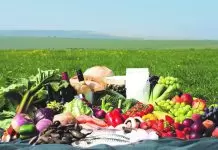
Duncan Williamson: “Agricultural biodiversity, to me, is one of the most exciting areas that you can work on. It is so important for delivering healthy, sustainable diets and healthy, sustainable food systems. It’s around the variety of plants and animals that can be cultivated or reared to deliver food that we eat.
“Often, in local situations, you should be growing the foods that are right for your climate. If you grow the right foods for your climate, they’re probably going to be more resilient to changing weather patterns or extreme events that come up.
“Also, agricultural diversity is key in the sense that it’s about a diverse range of crops and livestock. It’s not having one monoculture or just two crops across a vast area of acreage—like soybean in the Sado or palm trees in Indonesia. It’s about having a variety of crops interspaced with a variety of livestock, which can work together to build resilience. Maybe one crop doesn’t work, but that’s okay because you’ve got other crops that still provide you with food.
“Harvests will also happen at different times, so instead of having everything being harvested at exactly the same time, you might be able to stretch out the harvest over a period of three, four, five, six months and beyond. This is really important for delivering resilience but also giving local communities a regular income that keeps happening. They’re not just having all the income at one stage.
“Underpinning that as well is—as most nutritionists will say—agricultural diversity is about the variety of plants and animals. If you want to have a healthy, sustainable diet, it needs to be built on a wide variety of plants and animals and whole foods. The two go together really well. As they say, you should be eating from the rainbow—have a colourful plate—and that’s what you get with agricultural diversity.”


Q: In moving beyond net-zero pledges, what specific sustainability practices should businesses prioritise to drive systemic change within their operations and supply chains?
Duncan Williamson: “They’ve got to look at how the business is run. Most businesses do this—you’ve got to look at your own operations and your own immediate supply chains to see how you can make sure that you deliver those in such a way that they are net positive. We’ve got to go beyond net zero—they have to now be net positive. You have to be actively reducing the amount of carbon in the atmosphere.
“These businesses also need to be run in such a way that they are delivering for their supply chains. That’s not just environmentally delivering for their supply chains, but you have to make sure that everyone in the supply chain is treated fairly. Justice is a core part of it, and everyone is getting a fair share of the income that is generated.
“A business can’t be sustainable if someone two or three rungs down their supply chain can’t have a living wage. It’s really important to recognise that. They should also be advocating very strongly for reducing waste throughout the supply chain. That’s not just in their own operations but also through their suppliers, and also working with others to help people and citizens reduce their own food waste.
“Food waste is a low-hanging fruit, and some people describe it as a crime. It’s a waste of natural resources and it’s something that can be avoided if we’re careful. But it will mean businesses need to look at how they are marketing, what they’re selling, how much they’re selling, and how they’re selling it. We need to make sure that we eliminate food waste in the value chain.
“Another thing a business can do—which is important for reducing waste but also just important generally for the environmental footprint—is look at the packaging. Are they using excessive packaging? It’s an area that we are still working on, and people are recognising, but there are still examples of excessive packaging where it’s not needed. That has to be tackled as quickly as possible and has to be tackled in a responsible way that doesn’t encourage food waste.”
Q: As a sustainability advocate and public speaker, what is the core message you hope to leave audiences with when addressing today’s ecological and food system challenges?
Duncan Williamson: “I hope that audiences recognise that we are in a situation where action has to happen urgently. It’s no longer a case of waiting for future generations or for the next five years. Change needs to happen now and urgently because we are at risk of significant crises hitting us one after another that we’re not prepared for.
“But it’s also important to recognise this isn’t a reason to be negative. It’s not anti-business. We have most of the solutions now. We don’t need to wait for technology. We don’t need to wait for people removing carbon emissions from the atmosphere through giant vacuum cleaners in space. We don’t need to talk about a new type of technological innovation in our foods.
“We know most of the solutions now. We know what foods we need to be eating—we should be eating—so let’s work to deliver those. We know that agricultural biodiversity is a central part of our food system, so let’s work to incorporate that in all the food systems.
“We know we’re going to need to move away from a global homogeneous model to a diverse, localised model. We’ve got the solutions. We can do it. We’ve got to do it with a matter of urgency. But it’s not a case of waiting, because we can start working today to deliver the future we need.
“If we start working now—delivering a deep and urgent transition to the food system—we will be in a very strong position in the next five to ten years to adapt to climate change, to adapt to the biodiversity crisis, and to ensure that, as a race and as a business, we thrive going into the future.”
This exclusive interview with Duncan Williamson was conducted by Jack Hayes.