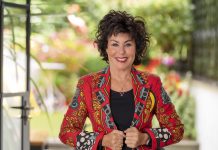




















Sarah Storey stands as one of Britain’s most decorated and influential Paralympic champions, revered not only for her extraordinary athletic achievements but also for the resilience, determination and integrity she brings to every endeavour. As a female inspirational speaker, she draws on decades of elite-level competition, leadership and life experience to challenge assumptions about ability, inclusion and performance.
In this exclusive interview with The London Keynote Speakers Agency, Storey reflects on what major sporting events like the 2012 Paralympics meant for disability inclusion, how organisations can learn from sport to cultivate a winning mindset and enable real equality, and why building the right team and culture remains essential — on the track, in the boardroom and beyond.
Q: London 2012 was framed as a watershed moment for disability inclusion. From your perspective, how far did the Paralympics genuinely transform public attitudes and opportunities for disabled people?
Sarah Storey: “London 2012 was set up to be the games that transformed the lives of all disabled people. And I said at the time I thought that was a relatively unrealistic expectation of a sporting event. We knew that the Paralympic Games had the way, had an opportunity to transform the lives of people with disabilities who are athletes, but being able to translate that into a social environment was always going to be a challenge.
“And what we found after those games was that so many people assumed that everyone with a disability was going to be on some kind of athletic trajectory, and that does not happen with an able-bodied person, so why should it in a disabled community. So, I think there were some unrealistic expectations.
“But I also think that it did pave the way for some of the discussions that we are having today, and it has also been able to allow us to kind of highlight the challenges that people face and allow us to continue those discussions. And there is still a huge amount of work that needs to be done to make sure that people with disabilities have the same access to opportunities and are treated in the same way in all sorts of different environments.
“But that platform that London gave us to have those conversations, and hopefully the athletes are able to continue to kind of talk back about what has happened and what has changed, what has not changed. And often it is helpful to be sort of brutally honest about these things.
“But as athletes, we do continue to strive and push forward to make sure that inclusion and diversity are always at the forefront, and everyone has something to offer. Allowing the conversation to be opened up to more people is a very valuable tool for us all.”
Q: What practical lessons can businesses take from elite sport when it comes to integration, accessibility and equal opportunity for disabled employees?
Sarah Storey: “If I was to offer up three ways in which the business world could utilise the example of the sporting world for integration, I think I would first point towards the way that we organise our competitions. We always make sure that we are replicating, or we try to make sure that as close as possible we are replicating the conditions and the situations, regardless of whether or not an athlete has a disability.
“So, in a workplace environment, that means providing the opportunities for those people who do need some additional considerations and making sure that you make those allowances where it is required. But obviously those people are still going to be delivering a role and delivering an outcome for you as a business.
“So, it might be that they need additional support within the desk environment, within the actual office environment. It might be that you need to make sure that they have access to a kitchen that they can get into for their break times. It might mean that they need additional support for getting to and from the particular place that you are asking them to work.


“When it comes to the role, it is the same role, and people with disabilities value the fact that they are treated in that same way and judged in the same way as somebody without a disability.
“Secondly, I think it is about making sure that the trajectory for people is the same. You do not need to lower your sights if you are a disabled person. You still want to challenge yourself, you still want to have the same ambitions and make sure that you are included and given that opportunity to thrive.
“And thirdly, celebration of success. And we do not always necessarily get this right in sport. We often focus on a very, very small number of people. But if you can celebrate the success of everybody in the same way and make sure that everybody has that opportunity to feel that their contribution was valued and that they are part of that bigger team, then that is also another way that you can learn from the way that sport might do things.”
Q: You often credit the strength of your support network for your longevity at the top of elite sport. How did you go about building a team you could truly rely on?
Sarah Storey: “Team is a word that we use in so many different ways. And often people see an individual athlete and assume that that team is just them, that they are a one-person team. But actually, team does not just mean the group of people or the person that you see executing a particular event or activity or sporting success. It can be the people behind the scenes and the people that make things happen.
“Now, for me, I am very much built around loyalty and around people that I can depend on. And I think there are lots of people who are like me as well. They like to know that the people that they are working with have got an understanding of where you have been, what you have been through, of your history as an athlete, your history as a person, and not just in an athletic sense, but also in a personal sense.
“And since I started my sporting career, I have not actually had that many coaches. I had a coach who coached me through the first four years of my career, and then I had another coach who kind of overlapped with that first four years. And then I had a second coach who coached me in the latter half of my swimming career. But since I started cycling, I have been working with the same team.
“And I think for me, as I have got older, that has enabled me to have the confidence in those people. And whilst I am relatively self-coached in the sense that on a day-to-day basis I decide what I am doing and how I am going to change things, these people are forming sort of my advisory board, if you like. They advise me as a person and as an athlete on how to make the best out of a situation that I find myself in.
“And I think it is a really valuable way of working, knowing who your mentors are, who your sponsors are. When you are not in a room, is there going to be somebody there who can think about whether or not you would be benefiting from something within that space. Making sure that you know who to call upon if you need some advice or support. And making sure that you know who you can rely on when things are going both well and less well.
“And so, I think about building a team around you and knowing who those people are. And it is one of the things that gives you confidence when you are going out there to perform. And I am certainly incredibly grateful to my team for sticking with me for such a long time.”
This exclusive interview with Sarah Storey was conducted by Megan Lupton of The Motivational Speakers Agency.