





















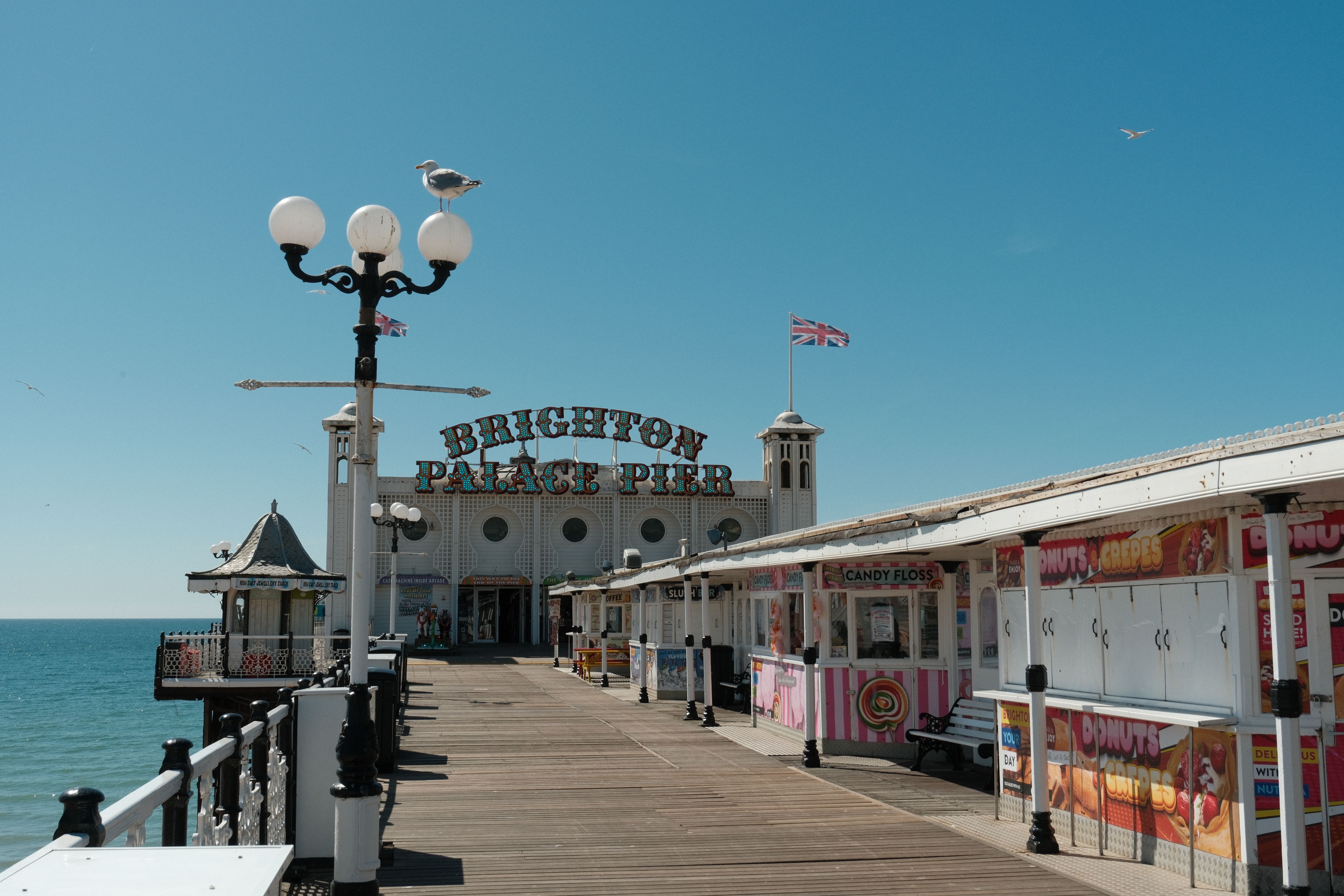


Few sounds say “day out at the seaside” like the chime and clatter of an amusement arcade. For generations, Brighton’s seafront has drawn visitors to its bright lights, rattling coins and rows of machines and the arcades on the Palace Pier have been part of that picture for well over a century.
Those arcades have also been quietly shaping modern entertainment. The fruit machine of the pier gave rise to today’s video slots, and the same simple appeal of a few spinning reels now lives on a phone screen, in games such as those found at BetWright Slots. It’s worth looking at how we got from one to the other.
A Pier Built for Pleasure
Brighton Palace Pier opened in 1899, at a time when the British seaside holiday was booming. Piers were designed as places to stroll, listen to music and be entertained, and it didn’t take long for coin-operated amusements to find a home on them.
Early arcades were full of mechanical novelties. There were test-your-strength machines, fortune tellers and “penny falls,” where a shelf of coins slides back and forth and visitors drop in pennies hoping to nudge a few over the edge. They cost very little and demanded no special skill, which is exactly why they became so popular.
The Rise of the Fruit Machine
The machine most people associate with the arcade is the fruit machine. Its roots lie in the late 19th century, when the first coin-operated reel machines appeared in the United States. Over time, symbols such as cherries, lemons, plums and bells became standard, and in Britain the name “fruit machine” stuck.
British machines developed their own character. Designers added features such as holds and nudges, which gave players a feeling of control over the reels, and the games became a fixture of pubs, clubs and seaside arcades alike. For many people, the 10p and 20p fruit machines of the 1980s and 1990s were their first experience of anything resembling a slot.
From Mechanical Reels to Screens
As electronics replaced gears and springs, machines grew more elaborate. Screens could show animated bonus rounds, bigger themes and more varied symbols, and the “video slot” was born. Soon the idea of a game built around a story or a character, rather than a row of fruit, was well established.


When the internet arrived, slot games moved online almost immediately. Early versions were simple, but as browsers and phones improved, developers could build games with sophisticated graphics, music and animation. A format that once required a trip to the pier could now be played at home, on the train or in a queue.
What Today’s Slots Have in Common With the Pier
Modern online slots may look very different from a pier machine, but much of the appeal is the same. The rules are simple, a round takes seconds, and there’s a bit of anticipation each time the reels stop.
The BetWright slots lobby reflects the way the format has diversified. Its slots page lists more than 300 games, spanning classic slots that are close to traditional fruit machine style, modern video slots with bonus rounds and free spins, Megaways titles and progressive jackpot-style games. Megaways, a mechanic first popularised in 2016, changes the number of ways to win on each spin, a long way from a fixed row of three reels.
Still a Seaside Tradition
None of this has killed the traditional arcade. Brighton’s seafront still draws crowds who come for the lights, the noise and the novelty of playing in person, and many visitors will happily do both: a few coins in a machine on the pier by day and an evening in with a game on the phone.
What the story shows is how adaptable a simple idea can be. A coin, a lever and a handful of symbols have grown into a global form of entertainment, and they started in places like Brighton, with a pocketful of pennies and an afternoon by the sea.