

















While the coronavirus has put many of us at home where we need to be that extra bit creative before we start losing it , James Howard talks us through some of his favourite albums and what can be some ideal listening while we are on lockdown.
Exile on Main Street, The Rolling Stones
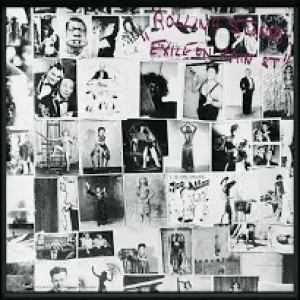 What is there left to say about this album? Yes, it’s The Stones at their peak and they, as tax exiles at the time, recorded the album with all the wealth, excess and isolation that their success had thrust upon them. Yet they were still hungry enough to strive for the exceptional. The mythology of the album is endless, and to misquote the writer Lester Bangs, I go with myths every time; namely, that its Keef’s album – stripped of artifice and pretence; recorded in his basement, in his sprawling, decadent South of France home in the sweltering summer of 1972. You can really tell that it was recorded in a basement too, and that’s the point. It’s quite literally subterranean. It’s also sprawling, dissolute, punkish and soulful; a grungy(especially on “Ventilator Blues”), lo-fi rock’n’roll double-album, with contributions from a long list of gifted supporting players, including Gram Parsons, horn player Bobby Keys and Producer Jimmy Miller. From the haunting beauty of “Loving Cup” to the defiance of “Happy”, and the jubilance of “Tumbling Dice”, there are no obvious, quick-fix singles; this is truly a body of work, a document of the consequences of hedonism, and an ode to rock’n’roll, blues, gospel, and Americana. A divine, fragmented shambles.
Malibu Ken, Malibu Ken
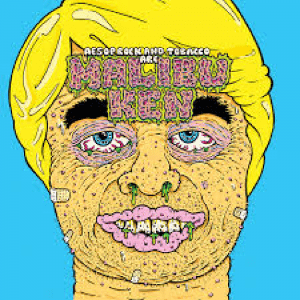 Working under the guise of his side-project, Malibu Ken with producer Tobacco, Aesop Rock – that truly idiosyncratic, bleak, hip-hop wordsmith, here shows his goofy side. No, really. Still, acerbic and caustic, but less bleak than his solo work, here he’s more like a hip-hop Mark E Smith, and he’s clearly having fun. The beats are dark, jagged and electronic, but juxtaposed with irreverent and still abstract, yet, more playful lyrics. Whether describing the foul state of his car that is home to unwanted mushroom growth(“Tuesday”), a self-deprecating take on his own alienation (“Corn Maze”), or the admittedly more serious, stand out track “Acid King”, wherein Aesop Rock re-tells the real-life case of a teenage murder case that had the tabloids in uproar in the 1980s – it’s deranged, erudite, fun.
Guns, Quelle Chris
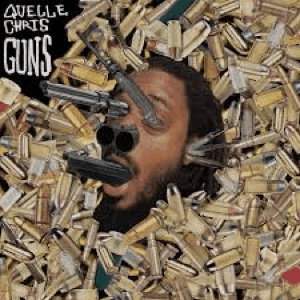 A kind of post-Charlottesville concept album, a meditation on the venality of the alt-right and Trump’s America, and the enduring legacy of US gun culture. Addressing how the love of guns is passed down through generations(title track “Guns”), it’s also full of Rza/Wu-Tang influenced beats, witty wordplay and though the targets are obvious – racism, populist nationalism(“It’s the Law”) – Quelle Chris aims for objectivity and insight, not a polemic – though it is always clear what side he’s on. By turns surreal, heartfelt(“Straight Shot”) and laconic, with insightful social commentary, it’s also often satirical, but never earnest or preachy. Though slightly uneven, it’s still one of the most inventive hip-hop albums of the last twelve months. Quelle Chris was scheduled to perform in Brighton in April, but alas, that, like life as we knew it, has been cancelled.
Station to Station, David Bowie
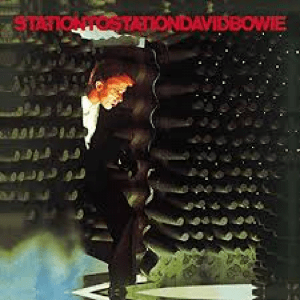 This album was the last before David Bowie’s celebrated Berlin period. Recorded in Los Angeles, and according to rock lore, in a final blitz of cocaine mania, it’s a transitional work in a canon that is largely beyond reproach. It introduced a new Bowie persona – The Thin White Duke, “a real nasty character” as Bowie himself described him, and within the thirty-eight-minute running time, Bowie uses the character to fuse transgressive soul, rock and even funk with songs about his friend and sometime muse Iggy freaking out on drugs(the brilliant ” TVC 15″), existential despair (“Word on a Wing”) and nostalgia -on the plastic-funk of “Golden Years”. Bowie would go on to record yet another classic album – the more experimental “Low” – within a year, at this point very much at the zenith of an extraordinary career.


The Madcap Laughs, Syd Barrett
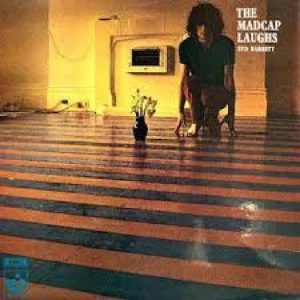 Syd Barrett has been mythologised, and thus probably misrepresented, to a degree that can seem distasteful, but his struggles, and legend, are inextricably part of the music. This, his first album after leaving Pink Floyd, recorded, according to Nick Kent and other music journalists of the time, amid severe problems with his mental health, is his Magnus opus. Genuinely whimsical and fragile, there is an eccentric innocence to the psychedelic-folk of songs like “Terrapin”, “Love you” and “Octopus”. On side two, “She Took a Long Cold Look” and “Long Gone” evoke, more explicitly, the underlying darkness that accompanied Barrett’s struggles. A gentle, off-beat joy.
The Cold Vein, Cannibal Ox
 When Cannibal Ox dropped this in 2001, nothing had ever sounded quite like it in hip-hop. Produced by El-P, it’s a bonafide, avant-garde masterwork. The first release on the now legendary independent label Definitive Jux, it came to define the label’s underground ethos and ideology, throwing down a gauntlet to a genre that was inert and bloated by cliche. Challenging, dense and prescient, and set in a New York City presented as decaying, festering, amoral and murderous, it came on like a Hip-Hop interpretation of Dante’s Inferno. The beats are ethereal and claustrophobic (“Iron Galaxy”), the catalyst for it’s an hour-long, electronic onslaught, unrelenting in its vision of urban life as a pernicious wasteland(“Straight off the D.I.C.”, “Ox Out Of The Cage”). Thus, with its abstract soundscapes, and its themes of alienation, isolation and the dark beats that accompany it – it remains an unimpeachable Hip-Hop classic.
Xtmntr, Primal Scream
 Recently dismissed in an interview by lead singer Bobby Gillespie as not being a political album, and that it gained its reputation as such because he must have been “mouthing off” in interviews at the time, this is, nonetheless, an insightful social snapshot of Britain at the turn of the last century. Despite the lyrics often pedalling reductionist juvenilia, the album was a ferocious, electronic-punk behemoth(notably on”Accelerator”) for a disillusioned generation finding its voice. Embellished with elements of drone, krautrock, techno – and even hip-hop – by the presence of indie legend Dan The Automator appearing as a producer on “Pills”, this, like many Scream albums, bears the auteur imprint of guest musicians. In this case, it’s former My Bloody Valentine mastermind Kevin Shields, whose noise-soundscapes and vision shape the majority of the songs. The result is this incendiary, sonic boom of an album. On tracks such as the incandescent “Shoot Speed/Kill Light” or the misanthropic “Swastika Eyes”, Primal Scream address turn of the century paranoia, government surveillance, and the Military-Industrial complex(no eye-rolling at the back please…) – even if, in retrospect, it was only the lead singers personal, and possibly, self-indulgent, anxieties that were being documented.