





















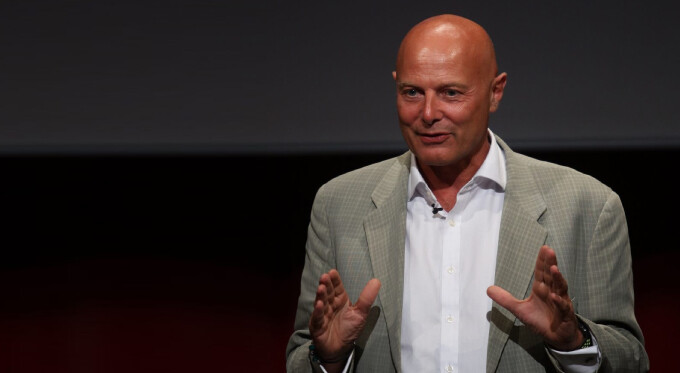


Roberto Forzoni is a leading psychology and neuroscience speaker whose career spans Premier League football, Olympic competition, and world championship boxing. Having worked with Brighton & Hove Albion, Crystal Palace and Brentford, he is widely respected for applying evidence-based techniques to elevate both performance and wellbeing. His mantra, “Feel Better, Perform Better,” has inspired world-class athletes, including Andy Murray.
Renowned for simplifying complex science into practical tools, Roberto has helped athletes reframe pressure, conquer imposter syndrome, and recover from setbacks. His impact demonstrates the central role psychology plays in achieving consistent high performance. Beyond sport, his expertise is regularly sought by businesses, media outlets, and leading organisations.
In this exclusive interview with The Champions Speakers Agency, Roberto reflects on his Brighton connection and shares key lessons from over 30 years at the forefront of sport psychology. From challenging myths about talent to outlining science-backed strategies for success, he reveals why mindset remains the ultimate game-changer.
1. What inspired you to adopt your mantra “Feel Better, Perform Better,” and how do you see it transforming an athlete’s mindset under pressure?
Roberto Forzoni: “I think the biggest thing that gets in the way of athletes performing well is external stressors or even internal stresses. So athletes come to see me when things are not going well. It could be the fear of other people’s opinion, could be the fear of failure, fear of things going wrong.
“So athletes might say in training I’m really good. I really can do everything I want to do. Top of my game, get to competition. The stress, the pressure comes in and I can’t recreate what I do in training, in performance, in competition when it matters.
“So, if athletes can get rid of some of that interference and that noise and feel good amongst themselves or for themselves, then they’re going to perform better. Because if they feel better, they’re going to be able to deal with pressure better. They’re going to make better choices, they’re going to be able to come back from setbacks a lot quicker. So, getting rid of some of that interference and making them feel good about themselves.
“One of the nicest quotes Andy Murray ever gave, and I can say this because it was in the public domain. He said to the press, “Roberto’s made me enjoy tennis a lot more.” And that was great because when he come to see me when we started working together, he wasn’t enjoying tennis. That was his career. So being able to enjoy what you do is hugely beneficial. So yeah, feel better and perform better.”
2. Many people believe elite performance is about innate talent. In your experience, what is the biggest misconception around high performance—and what actually makes the difference?
Roberto Forzoni: “When you look, Ronaldo recently on a TV interview had a book and he said, “This is the manual of success for me. I can give it to anybody and they can emulate exactly what I’ve done.” But they won’t because they won’t have that discipline to go to the gym every day and do what I’ve done.
“Lionel Messi famously gets up at 6:00 or gets to the training ground at 6:00 when most of the other players turn up at 9. Why does he do that? He does it to get an extra three hours of training in and he’s the best player in the world. So in basketball it’s the same. Kobe Bryant and Michael Jordan used to train relentlessly.
“So you look at these players and you think I can’t be as talented as them. So a funny quick story—I was working at Charlton. Chris Pal was the manager. I said, “Who’s the best player you worked with?” He said, “Paul Dano.” And I said, “Tell me about him.” He said, “We used to be going out of training ground at one o’clock going home. You’re the best player here. Why are you doing that?”


“And he looked and said, “That’s probably why I’m the best player here, ’cause I’m doing that extra.” So, I think the biggest myth about high performance is, “Oh, they’re talented. They’re born talented. I can’t emulate that.” And it’s like actually they are very talented but it’s the work they put in.”
3. Elite athletes often hit a mental block during competition. From your time working with top performers, what are the common psychological hurdles—like imposter syndrome or fear of failure—that hold them back, and how do you help them overcome these?
Roberto Forzoni: “I would say there’s probably three. There’s that fear of failure, there’s an imposter syndrome, and fear of other people’s opinion—the three things.
“So fear of failure is a big one. People don’t want to fail, so they don’t take the risks. A big thing is as players will come to me, and this happens in every sport—golf, boxing, tennis, football—in training, we’re on fire. We can do everything, but when it gets to the crunch, we can’t emulate what we do in training.
“Now, clearly they’ve got the talent, they’ve got the ability physically, technically, tactically, everything’s there. So what happens when they go to competition? It’s just something gets in the way. It’s a mindset shift.
“So training their mind to be able to reframe what’s happening into something that is strategically focused. So rather than focus on what could go wrong—fear of failure, imposter syndrome, “God, I shouldn’t really be in this final.” Well, you’re in the final because you deserve to be there.
“Trying to get rid of that, and I just call it noise, and focus on your performance. That’s the biggest thing. So the biggest thing that gets in their way is probably an untrained mind. They spend lots of hours in the gym, lots of hours looking at videos of other people performing their sport, but they don’t spend a fraction of that time on their psychology.”
4. You’ve built your approach on a foundation of rigorous academic research and real-world coaching. Could you share how your background shapes the practical strategies you take audiences through on the path to peak performance?
Roberto Forzoni: “Coach Crystal Palace, Brentford, Brighton first teams, and I wanted to be the best coach I could. So I enrolled in a sport science masters and I took every course I could with the Football Association. I graduated and majored in psychology and then went on to write the FA guide to psychology and football.
“While I was coaching football, I was lecturing as well. And I think because of my imposter syndrome, I really wanted to learn as much as I could about performance and psychology. What does the science say? What is the evidence base to what we’re doing, and why does it work and why does it fail?
“So I was so conscious of my background, being born in London, a London boy, and having that knowledge, that I just put myself into every situation I could to learn. Read as many books as I can, done my masters, lectured, graduated, become a sports psychologist. So I went for all that accreditation.
“So I think it’s really important to have an evidence base to what you do and I bring that to my talks. And there’s a great underpin of this works because of the research. This is what the research says and because of 40 years of doing this in practice, this is how it works as well.
“So looking at the research evidence and the practical application, putting those things together and making the research and the science understandable to athletes. So working with the GB rugby team, the wheelchair rugby team going to the Olympics. One of the nicest comments was, “You made us understand what psychology was, because the last guy we had was using all these big words and we couldn’t understand what he was trying to get at. You’ve really simplified it.”
“And it’s similar to what Bob Rutella done recently with Rory Mroy. Bob Rutella, big psychologist, and he just demystifies and debunks what psychology is and puts it into real simplistic terms that golfers can understand and go, “Wow, is that what it is? I should have been doing this years ago.”
“So it’s simple processes, but having that evidence base I think certainly gives me the confidence to be able to go into a room—whether it’s world heavyweight boxing championship fight, whether it’s a grand slam final, World Cup final football, whatever it is—I can go into a room and speak to players and be confident that what I’m saying has got some substance to it. It’s not just me making things up.”
This exclusive interview with Roberto Forzoni was conducted by Chris Tompkins of The Motivational Speakers Agency.