























Something extraordinary — and extraordinarily smelly — is coming to Kew Gardens.
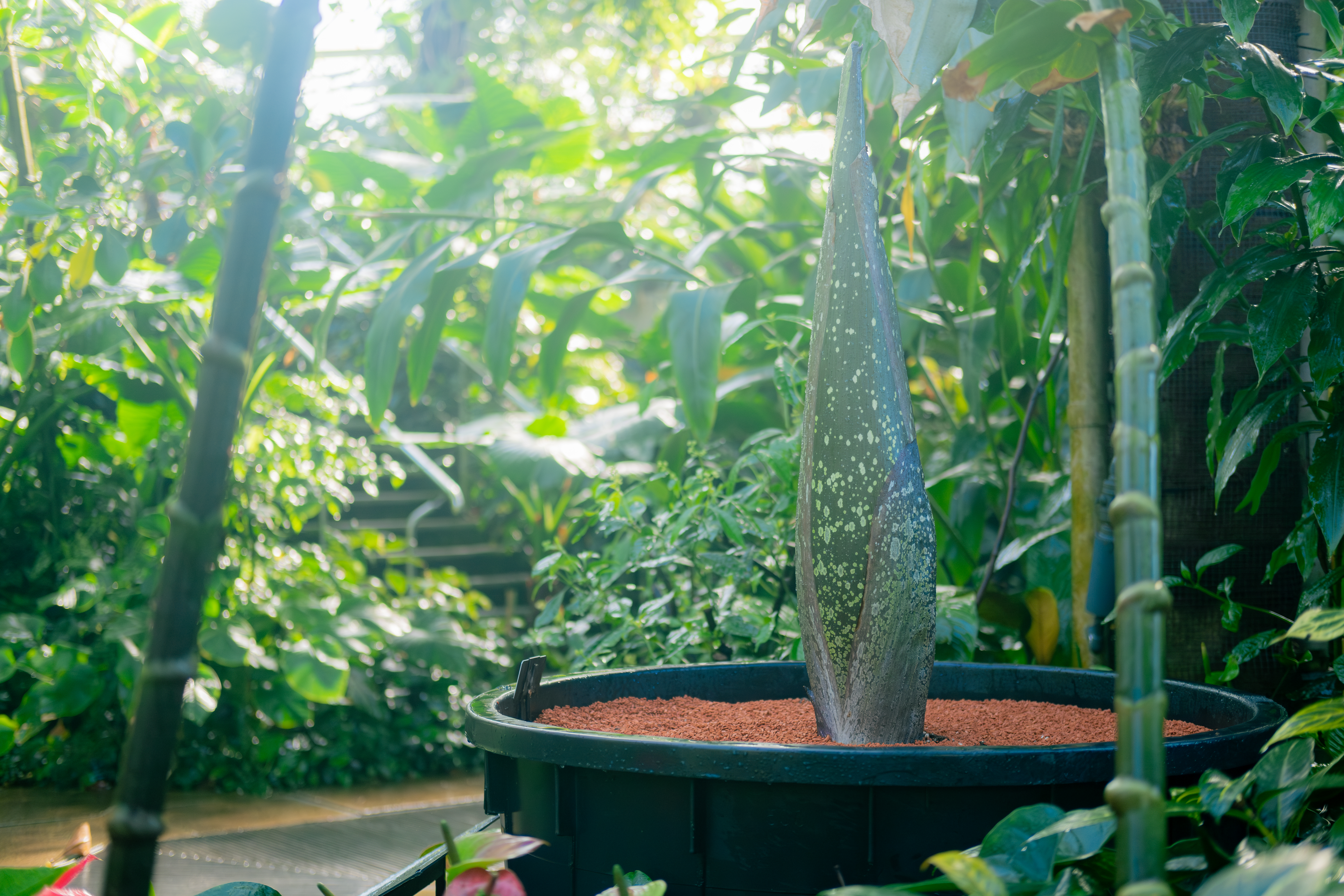
The Kew Gardens corpse flower is days away from blooming. The first titan arum of 2026 is preparing to open inside the Princess of Wales Conservatory — and if you want to witness one of the most spectacular and bizarre events in the natural world, you will need to move quickly.
The bloom lasts just 48 to 72 hours.
Kew Gardens Corpse Flower — What Is the Titan Arum?
The titan arum (Amorphophallus titanum) is one of the most extraordinary plants on earth.
Native to the rainforests of Sumatra, it produces one of the largest inflorescences in the world — reaching up to 3 metres in height. It is rare, endangered and entirely unpredictable. And when it finally blooms, it releases an unmistakable stench of rotting meat — an evolutionary adaptation designed to attract carrion flies and pollinators deep in the Sumatran rainforest.
At Kew Gardens, it has become one of the most popular visitor events the botanical garden hosts. When the second bloom flowered in 1926, the police had to intervene to manage the crowds.
The 2026 Bloom — What Kew’s Experts Say
The current specimen has been growing at an extraordinary rate — approximately 8cm per day — and now stands at over 2 metres 20 centimetres.
Solene Dequiret, Princess of Wales Conservatory Manager at Kew, said the team is confident the bloom is imminent: “We have been looking after the plant for a few weeks now, and it is now growing at an incredible pace. The bud now measures more than 2m 20cm in height, so we’re all getting ready for the smelly spectacle to start. You can feel the excitement in the air.”
Tom Pickering, Head of Glasshouses Collections, added: “Simply put, there is no avoiding the titan arum once it has opened. The moment you set foot into the glasshouse, its unmistakable stench hits you right in the face and overwhelms your senses. And yet, despite this formidable feature, it is easily one of our most popular visitor attractions.”
Why the Corpse Flower Matters Beyond the Spectacle
The titan arum is listed as Endangered on the IUCN Red List of Threatened Species — primarily due to deforestation and land use change in Sumatra, where its habitat is cleared for timber and oil palm plantations.


Kew holds approximately 40 titan arum specimens of varying sizes and ages, most donated as seed from the Botanic Garden at the University of Bonn. Because the plant’s seeds cannot be dried and stored in the Millennium Seed Bank, cultivation in living collections like Kew’s is one of the most important methods of conservation available.
“The Titan Arum is a fine example of how botanic gardens play an important role in conserving endangered plant species,” Pickering said. “By cultivating, propagating and distributing plants within a community of botanic gardens, we can help to conserve threatened species so that they survive despite uncertain futures.”
How to See It
The bloom will last just 48 to 72 hours — and Kew’s horticulturists cannot predict the exact moment it will open. Follow @kewgardens on Instagram for real-time updates; Kew will announce the opening there first.
The titan arum is housed in the Princess of Wales Conservatory at Kew Gardens, Richmond. Entry is included in standard Kew admission.
📍 Royal Botanic Gardens, Kew, Richmond, Surrey TW9 3AE
🌐 kew.org 📸 Follow @kewgardens for live updates
🚇 Kew Gardens station (District line / London Overground)
The Kew Gardens corpse flower is one of the most extraordinary natural events you can witness in the UK — and it is happening right now.
Brighton Journal has been covering Kew Gardens throughout 2026 — from the Henry Moore: Monumental Nature exhibition to expert advice on creating a bee-friendly garden. For more cultural day trips from Brighton, explore our Places to Visit Near Brighton guide.