























Liverpool isn’t one of the world’s “blue zones” — those regions like Sardinia, Okinawa, and Ikaria where people tend to live unusually long lives. Healthy life expectancy in the city is just 56 years. But overall life expectancy is much higher, with many residents living into their late 70s and beyond — often spending their final working years and a large part of retirement managing chronic illness or disability.
Ageing is inevitable. Losing independence is not.
Krisztina Rudolf, a PhD researcher studying muscle ageing at Liverpool John Moores University, works with adults in their 70s whose strength, mobility, and resilience challenge every assumption about later life — despite many of them living with serious long-term conditions.
Jackie has three prolapsed discs and osteopenia, a condition where bone density drops and fracture risk rises. Norma lives with a stoma following bowel cancer surgery. Mike jokes that his medical notes make him sound like “a wreck.”
Then you see the three of them train together five times a week.
During lockdown, when gyms closed and isolation threatened their health, they converted Mike’s garage into a makeshift training space. “We thought, we’ve got to do something,” Mike said.
They run parkrun, climb stairs deliberately, and value the feeling of being challenged — slightly breathless but capable. Rudolf calls them Liverpool’s “blue people.” Their experience suggests that ageing well depends less on where you live and more on how you live.
Why muscle matters more than most people realise
Skeletal muscle isn’t just what helps us move. It’s the body’s largest metabolic organ — essential for regulating blood sugar, maintaining body temperature, and preserving independence.
And muscle ageing starts earlier than most people think. From our 30s, strength begins to decline, often faster than muscle size. People can look healthy while their muscle function is quietly deteriorating.


One simple test: try standing up from a chair and sitting back down five times as quickly as possible without using your hands. If it feels slow, difficult, or unstable, it may signal reduced muscle quality.
This matters because muscle function predicts future health. Poor muscle quality increases fall risk, slows recovery, and raises the likelihood of conditions such as type 2 diabetes.
At the microscopic level, muscle quality is shaped by proteins that generate force, produce energy, and repair damage. During physical activity, muscles rebuild and reorganise their protein machinery to meet demand. When muscles aren’t challenged, the system becomes less responsive and function declines.
Rudolf’s research uses “dynamic proteome profiling” to track how thousands of muscle proteins are produced and renewed in older adults. Participants complete strength and mobility tests, wear activity monitors, and provide small muscle samples.
The results don’t show simple deterioration. Older muscle is different but remains adaptable. Protein turnover may be slower and some repair processes less efficient, but muscles still respond to activity by building the proteins needed for strength, energy production, and resilience.
Even later in life, muscles adapt when they’re used.
A gym, not a lab
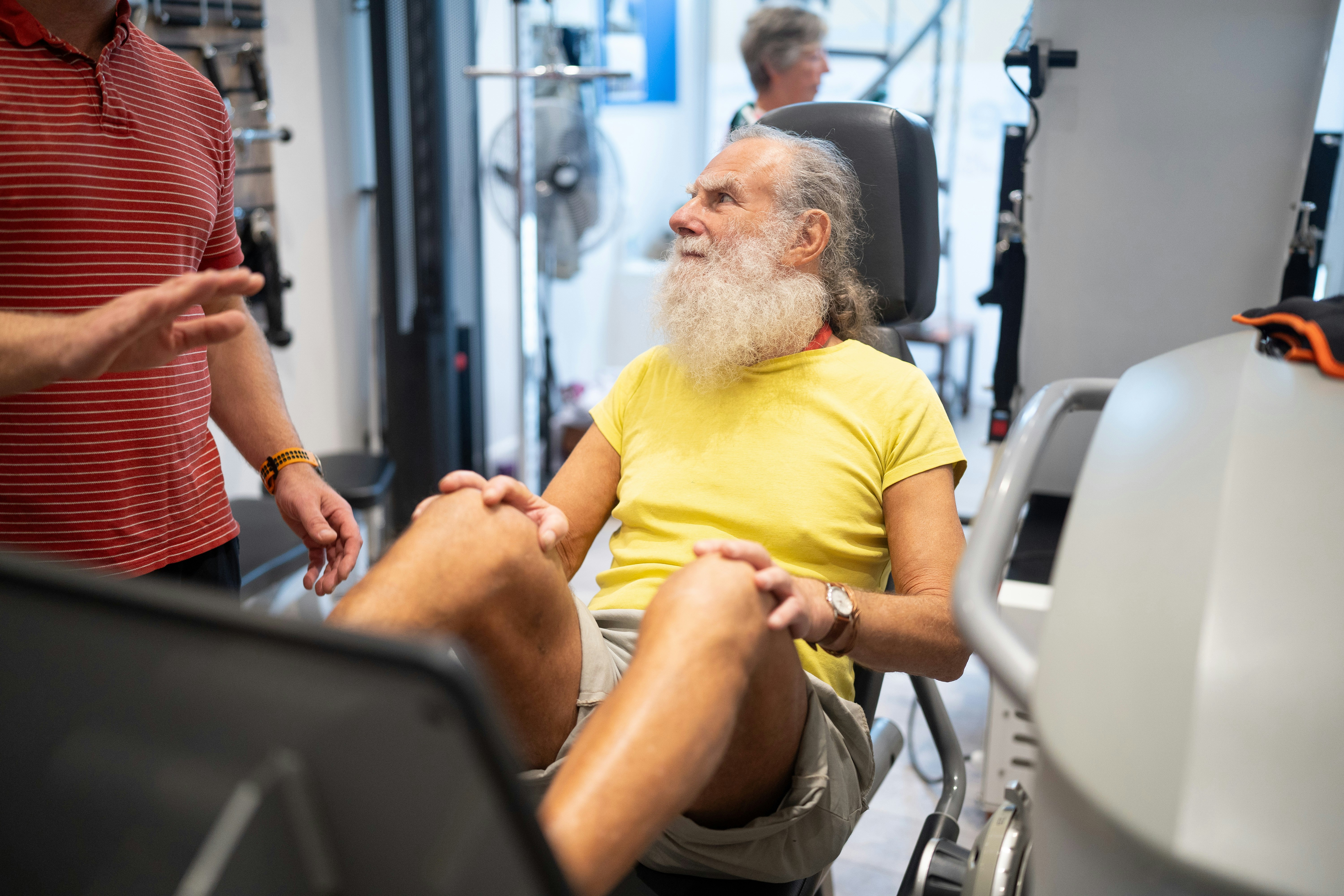
Ray’s gym is a community fitness space in Liverpool where many of the research participants train. It’s not a formal research site — it’s where the group work out, supporting each other and maintaining the strength and mobility that underpin their independence. Members aren’t defined by their age. They’re people working toward goals that matter to them — often, simply staying independent and in control of their lives.
This challenges the common blue zone narrative, which emphasises location, diet, or lifestyle traditions as the main drivers of longevity. Those factors matter, but they can create the impression that healthy ageing is determined by where you live rather than what you do.
Liverpool’s blue people suggest something different. Their strength comes not from perfect health but from ongoing adaptation. Muscle quality isn’t fixed — it reflects the demands placed on it.
The implications are significant. Healthy ageing doesn’t require relocation to longevity hotspots or adherence to exotic diets. It begins with recognising muscle as the organ that underpins independence and maintaining it through regular activity.
Most of us can become a “blue person” — by investing in the organ that most strongly shapes whether we age with independence as well as longevity.