

















A quiet revolution is underway in Brighton’s art scene—and it’s not being led by institutions or insiders. It’s emerging from the grassroots, shaped by working-class women who are building the spaces they couldn’t find, and filling them with art, community, and intention.
One of the clearest examples of this shift is the growing influence of Mid Street Lab, an artist-led platform in Kemptown that has quickly established itself as a force for accessible, socially conscious art. Their spring exhibition, Time Is the Real Currency, didn’t just showcase 22 local artists—it redefined what an inclusive, collaborative art space can look like.
Curated with care and a deep sense of purpose, the show centred artists’ time, trust, and lived experience. The team behind it included Social Anthropologist and in-house curator Dr. Jane Savage, immersive producer Rikki Tarascas, and emerging curators Charlotte Desposito and Asia Novicki—co-founders of Brighton Women in Art group, an online collective championing female creatives in the city. That initiative, born out of Mid Street Lab’s programming, is already becoming a vital new voice in Brighton’s creative ecosystem.
“Women like Charlotte and Asia are doing more than curating—they’re changing the culture,” says JJ Wachter, Mid Street Lab’s founder. “They’re building what they needed and inviting others in.”
This summer, Mid Street Lab continues that momentum with Between the Trees, the debut solo exhibition of Rachel Benjamin. After more than 20 years teaching art, Benjamin returns to her own creative voice with a series that is both personal and hauntingly universal. Drawing on themes of memory, childhood, and transformation, her work stands as a quiet rebellion against years of creative silence. As she puts it, “I finally gave myself permission to take up space.”
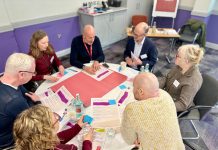
The Lab’s mission extends beyond exhibitions. Their Catalyst Group workshops—ranging from zine-making to upcycled jewellery—offer hands-on opportunities for people of all backgrounds to explore creativity without gatekeeping. It’s a model of artistic empowerment that feels less like a gallery and more like a movement.
Earlier this year, Mid Street Lab sponsored the Brighton Fringe Community Award, choosing Sitting (In Silence) by Kitty Falcon as its winner. The play’s exploration of grief, suicide, and intergenerational silence struck a powerful chord—not just artistically, but socially. With embedded partnerships like Dad La Soul and Papyrus, Falcon’s work turns personal pain into community action, perfectly aligning with Mid Street Lab’s ethos.
What’s happening in Brighton is part of a larger pattern. From Lisbon’s seafront arches to artist-run spaces across Europe, urban creativity is shifting away from elite institutions and toward people-powered platforms. In that wave, working-class women in Brighton are not just participating—they’re leading.
Mid Street Lab is proving that when artists are given support instead of scrutiny, and collaboration is prioritised over competition, something transformative happens.
And the city is paying attention.
BY Jean Jules Wachter