


















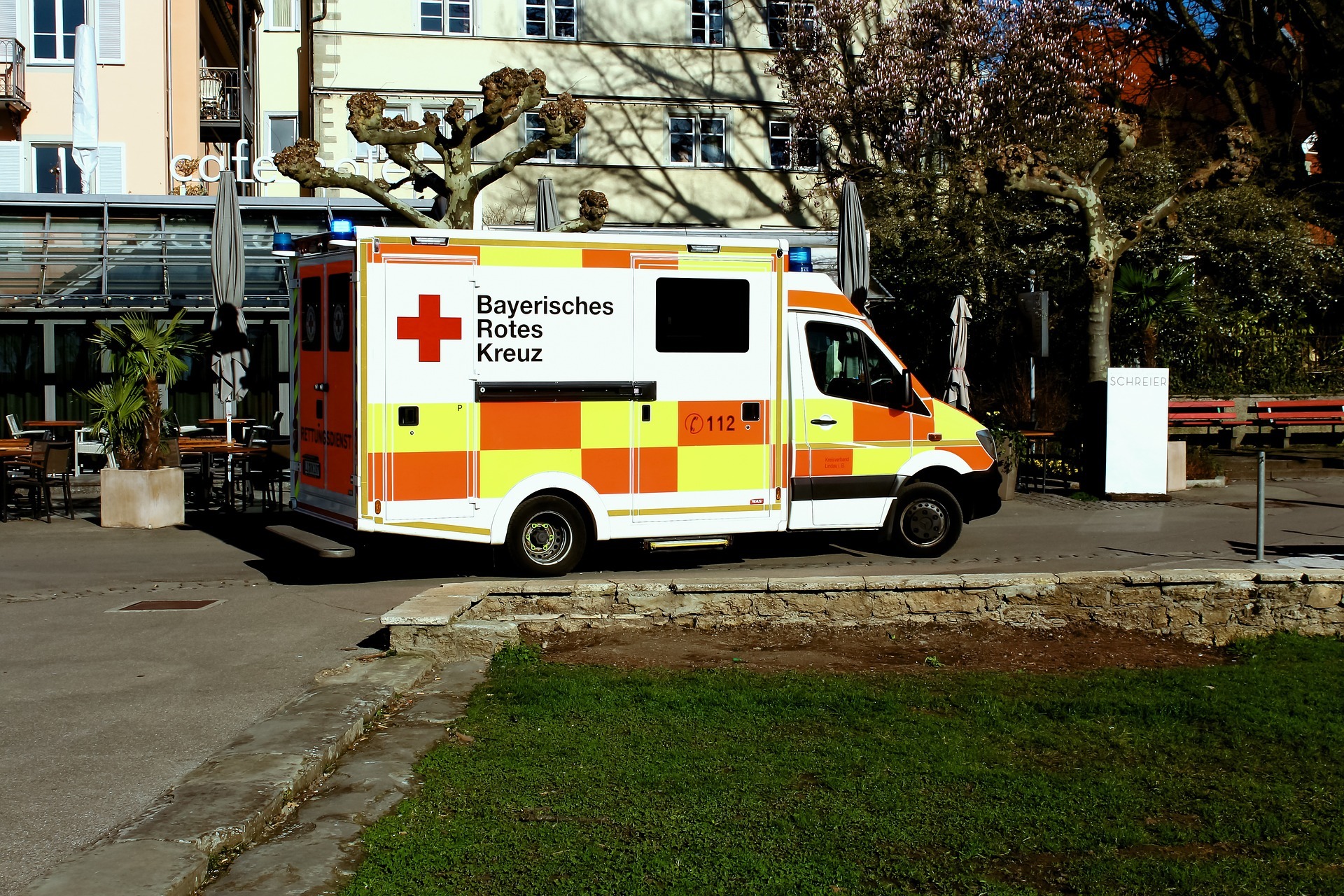


When I started counting the NHS vehicle estate, the numbers were larger than I had expected at every level. Vehicles that trusts own or leased come to about 12200 across acute hospitals, community services, specialist provision, and mental health settings. On top of that sits the primary care grey fleet, community nurses, and outreach workers using their own cars for NHS business. Something around 155 million miles a year runs through that grey fleet alone. The ambulance fleet itself adds roughly 4300 DCAs and around 1500 rapid response and specialist vehicles. I find that figure is still surprising to people who should probably know it. Pile it all together, and you are looking at over 460 million miles annually across the whole estate. Over the past few years, unevenly and without any central direction that I have been able to identify, a growing share of those miles has started producing structured data in something close to real time. Before that, the recording was mostly handwritten vehicle logs completed at the end of a shift, and by the time anyone read them, they were useful for auditing what had already happened and not much else.
SCAS put its predictive maintenance programme into formal operation in March 2025. The conceptual framework behind it came from aviation rather than road haulage. That is worth dwelling on because it is not an obvious comparison. A fleet operations person I spoke to early in my reporting made the point that aviation maintenance is essentially continuous, that the aircraft is being assessed against its route profile the whole time it is flying. SCAS tried to replicate that logic with what was already fitted to the vehicles. Before the trial started, each ambulance was already running two telematics units, one on the drivetrain and electrical systems, and one connected to dispatch. The predictive layer brought in Ordnance Survey geospatial data on gradient, surface type, sinuosity, and whether the route being driven is urban or rural. The data engineer on the programme said the starting problem was straightforward enough. Two vehicles with nearly identical mileage were arriving at their service intervals in completely different mechanical conditions. Nobody at the trust had been able to explain it. The modelling so far is pointing at gradient and sinuosity. Conventional maintenance schedules basically count kilometres and have never tried to account for either.
East of England Ambulance Service took a narrower approach to the same problem. For most fleet managers watching from other trusts, I think it is probably the more useful model in the near term. Their sustainability strategy for 2024 to 2025 names idling as a specific target. That sounds straightforward until you see what the numbers looked like. A fleet operations manager at a comparable trust in the East Midlands, running around 280 vehicles, told me idling was almost always the number that hit hardest when senior staff first saw the data. At his depots, the engines were running for close to 12 minutes at the start of each shift before a single vehicle pulled out. Nobody had measured that before. EEAST’s vehicle and equipment spend for that year came to about 3.3 million pounds. The business case for the telematics rollout was that fuel savings and lower incident costs would justify the outlay over time. Whether the arithmetic is actually bearing out, I cannot confirm from public documents. I have not found a breakdown by trust, and I have looked.
Community nursing is the part of this that I have spent the most time on, mainly because even people inside the trusts told me they had not thought about it in fleet terms. The telematics data points to the same conclusion, that a NHS community nursing operation covering rural Shropshire or the dispersed settlements across Northumberland is functionally almost identical to a small local delivery network. The drivers visit the same addresses along the same corridors on the same weekly cycle. A telematics system running across that kind of operation builds route intelligence down to individual residential addresses within weeks, and the resulting dataset is the sort of thing commercial courier companies spend significant money constructing from scratch. The NHS ends up with it as a byproduct of running its clinical rounds. What individual trusts do with that data, or whether they even see it as having operational value beyond the clinical record, varies enormously from what I have been told. I have not found a consistent answer to that question.
NHS Lothian gets mentioned more than any other trust in conversations about sustained telematics deployment in ambulance and community health. The system logs driver identification on every journey and records speeding events, harsh braking, cornering, and acceleration automatically. The administrative case for it was the paper logs. They had become a serious burden on the transport teams. A transport compliance officer at a large integrated care board in the north of England, who tracks the Lothian model for policy purposes, told me the conversation among trust fleet managers had shifted substantially in the past couple of years. It used to centre on whether to deploy telematics in the first place. Now, he said, the questions are about what obligations the data creates, because in a number of trusts, the procurement contracts were signed and the systems went live before anyone had worked out a governance framework for vehicle movement records at that density. Several of the trusts he named are still working through it.
In patient transport, the data volumes sit at a different scale from anything else in the NHS fleet. Nationally, the NHS runs over 11 million planned patient journeys a year. That comes to roughly half a million miles of patient transport every weekday. Yorkshire Ambulance Service alone operates over 370 vehicles dedicated to patient transport. East Midlands Ambulance’s patient transport operation logs around 20000 journeys a month. A senior data governance officer at one of the larger regional trusts told me his team had not settled on a retention policy for vehicle movement records. The procurement moved faster than the governance work did, he said, and no one caught the gap before the systems were recording. Trusts that have rolled out full telematics across their transport fleets are now generating monitoring data at a density that matches what a well run contract logistics company would produce. In at least one case, the data density is probably higher.