














 Brighton is widely recognised as one of the UK’s most creative cities. Its independent spirit, cultural diversity and artistic energy are central to its identity. Yet behind this reputation lies a quieter reality: many of the artists who help shape the city’s cultural life struggle to sustain their practice over time.
Across the cultural sector today, a broader debate is emerging about how artistic ecosystems function. While major exhibitions and institutions continue to play an important role, the majority of artists work outside these structures, often balancing creative work with teaching, freelance employment or other jobs.
In cities like Brighton, the challenge is not a lack of talent. The challenge is ensuring that artists can continue making work beyond the early stages of their careers.
Two exhibitions opening this month highlight this issue in different ways.
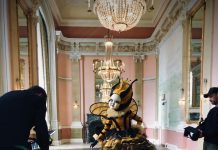
At Mid Street Lab in Kemptown, experiential practitioner Helena Bryant Taylor presents Body of Play, a research-based performance exploration marking her return to practice after a fifteen-year pause. Her project reflects a reality shared by many artists whose creative work evolves around family life, economic pressures and shifting professional responsibilities.
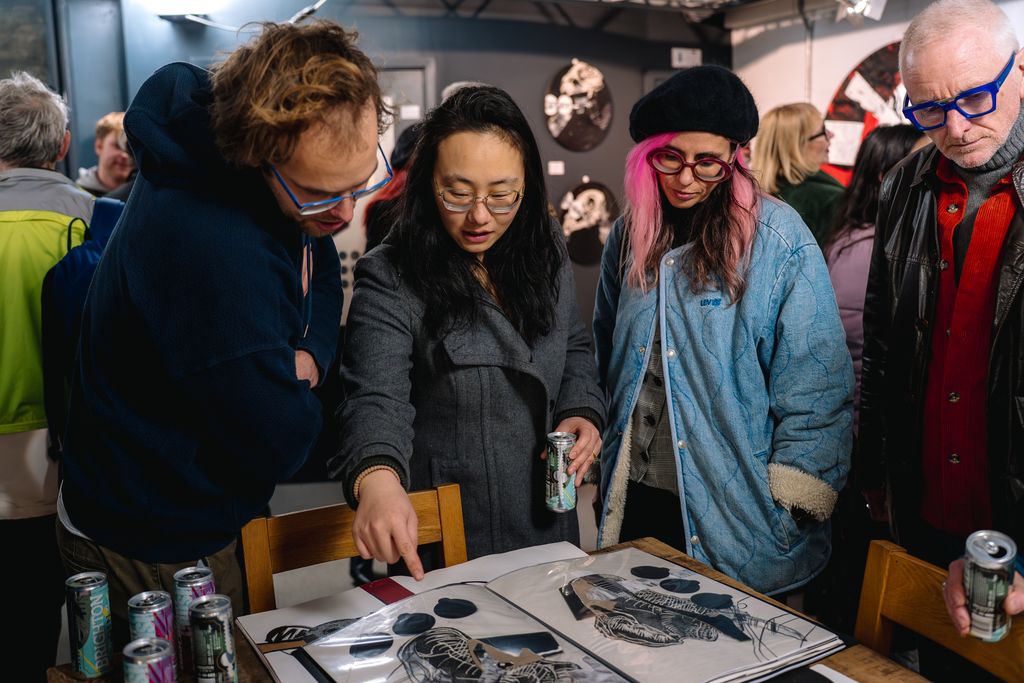
Meanwhile at The Vault, a gallery space on Brighton seafront, the exhibition Still Making brings together artists who are also art educators. Curated by Rachel Benjamin-Haque, herself an art teacher and now director at Wach’Art, the exhibition highlights practitioners who continue producing work alongside their teaching careers, often away from the visibility of commercial galleries.
Together these projects raise an important civic question: how do cities support the artists who quietly sustain their practice over decades?
Over the past two years, Wach’Art CIC has been exploring this question through the development of Mid Street Lab, an experimental artist space where work can be observed and discussed as it evolves. Since October 2025, the opening of The Vault has added a public exhibition platform, allowing these conversations to reach wider audiences.
Through this work, a curatorial approach has gradually taken shape that we call Altruistic Art.


Altruistic Art proposes that artistic practice should not be understood only through commercial success or institutional recognition. It also recognises the broader cultural value that artists contribute to communities: imagination, dialogue, reflection and shared meaning.
The practice is structured around four interconnected actions: watching, curating, collecting and writing about artists and their work over time. Together these actions form a curatorial methodology that places artistic development within a wider ecosystem of relationships.
In this model, curators do not simply select finished works for exhibition. They observe artistic processes, create spaces for experimentation and help contextualise ideas for audiences.
Collectors and patrons also play a different role. Rather than engaging only at the point of acquisition, they can become participants in sustaining the environments where artistic practices develop. Supporting studios, exhibitions and cultural initiatives becomes part of a broader civic contribution.
Community participation is equally important. Volunteers, visitors, local businesses and cultural organisations all contribute to the vitality of an artistic ecosystem. Through programmes such as Flow Mode, Wach’Art has begun to experiment with building these connections across Brighton.
This approach does not replace existing cultural institutions. Instead it complements them by focusing on the long-term conditions that allow artists to keep working.
Brighton’s creative reputation was not built solely through festivals or institutions. It grew through generations of artists who chose to live, experiment and collaborate here.
If the city wants to preserve that spirit, it may be worth asking a broader question: how can Brighton strengthen the cultural ecosystems that allow artists not only to start their careers, but to sustain them over time?
The conversations emerging through Body of Play, Still Making and the wider Wach’Art programme are one attempt to explore that question. They invite us to think about art not simply as entertainment or prestige, but as a shared cultural resource that contributes to the wellbeing and imagination of the city.
If Brighton truly values creativity, supporting the artists behind it must remain part of the civic conversation.