















Today, more and more people are becoming interested in heritage and restoration. Indeed, in Brighton, conservation has always been a key issue, as the area has aimed to retain its historical buildings for decades. As an increasing number of historical buildings in Brighton are receiving investment and development, let’s take a look at some buildings in Brighton that are symbolic of the area’s influence.
Whilst the Indian-influence that went into the design of the Royal Pavilion is often talked about, other key influences tend to be a bit overlooked. In particular, Greek revival architecture was historically very prominent in Brighton, especially during the Regency era, which contributed to its acclaim in the 19th century as having a strongly individual character of architecture. Unfortunately, only some examples of this influence still stand today in the form of churches.
So, without further ado, let’s dive into some of the unique churches in Brighton that highlight this Greek-inspired architectural past.
Brighton Unitarian Church
“Temple of Hephaestus” (CC BY 2.0) by EDrost88
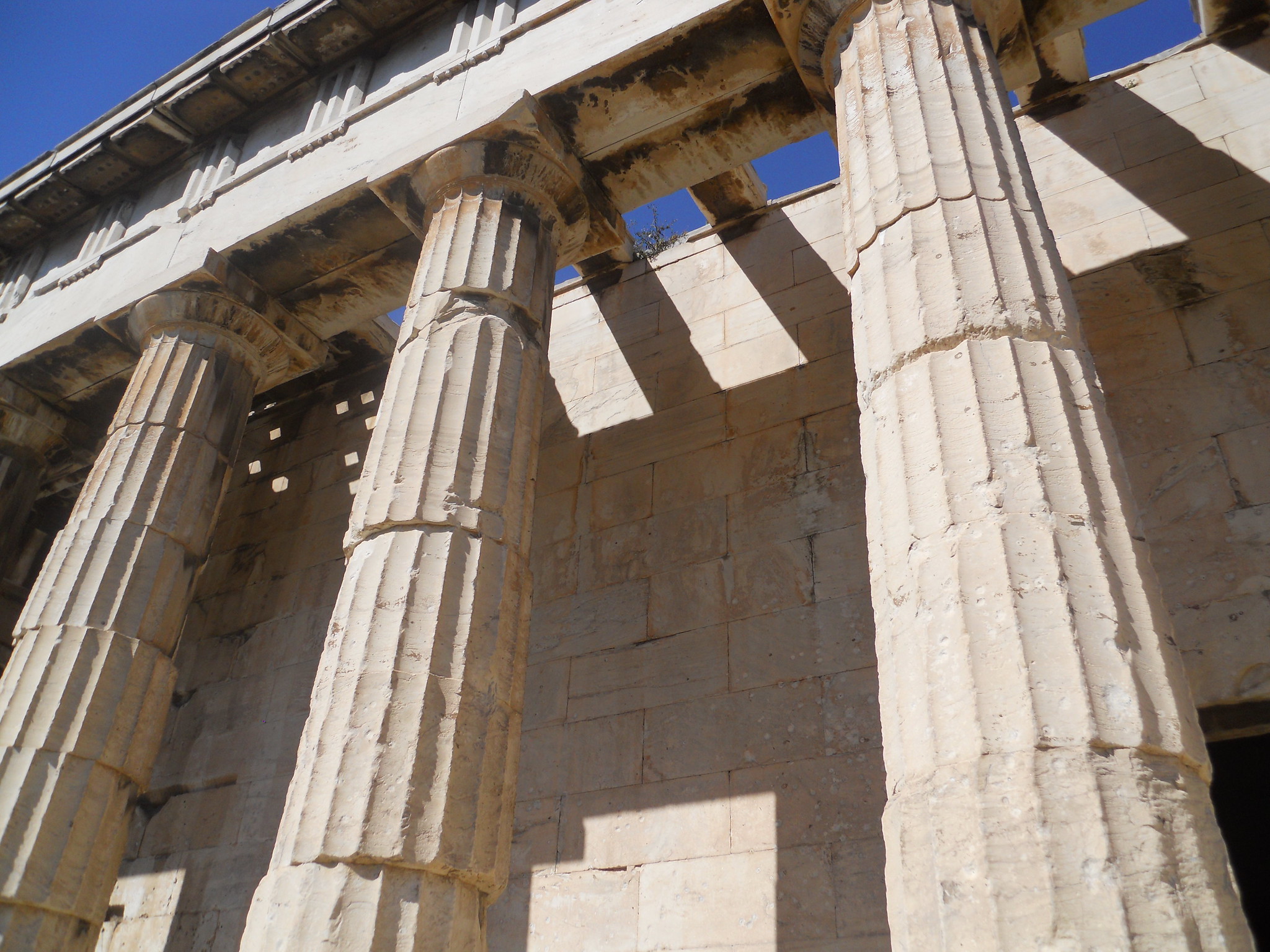
In a wide range of entertainment, ancient Greek architecture uses some key themes and symbols. Namely, textured Doric columns, white facades, mouldings (otherwise known as entablature), and pediment gables. These icons are used to create believable locations for films and TV, as well as online casino games, with instant win gaming options such as Slingo Thunder of the Gods, Age of the Gods Scratch, and Olympus Strikes Ultra Tap, all using these instantly recognisable icons to make the theme immersive and engaging. As these games are fast-paced, they show just how intrinsically linked they are to the setting of Ancient Greece.
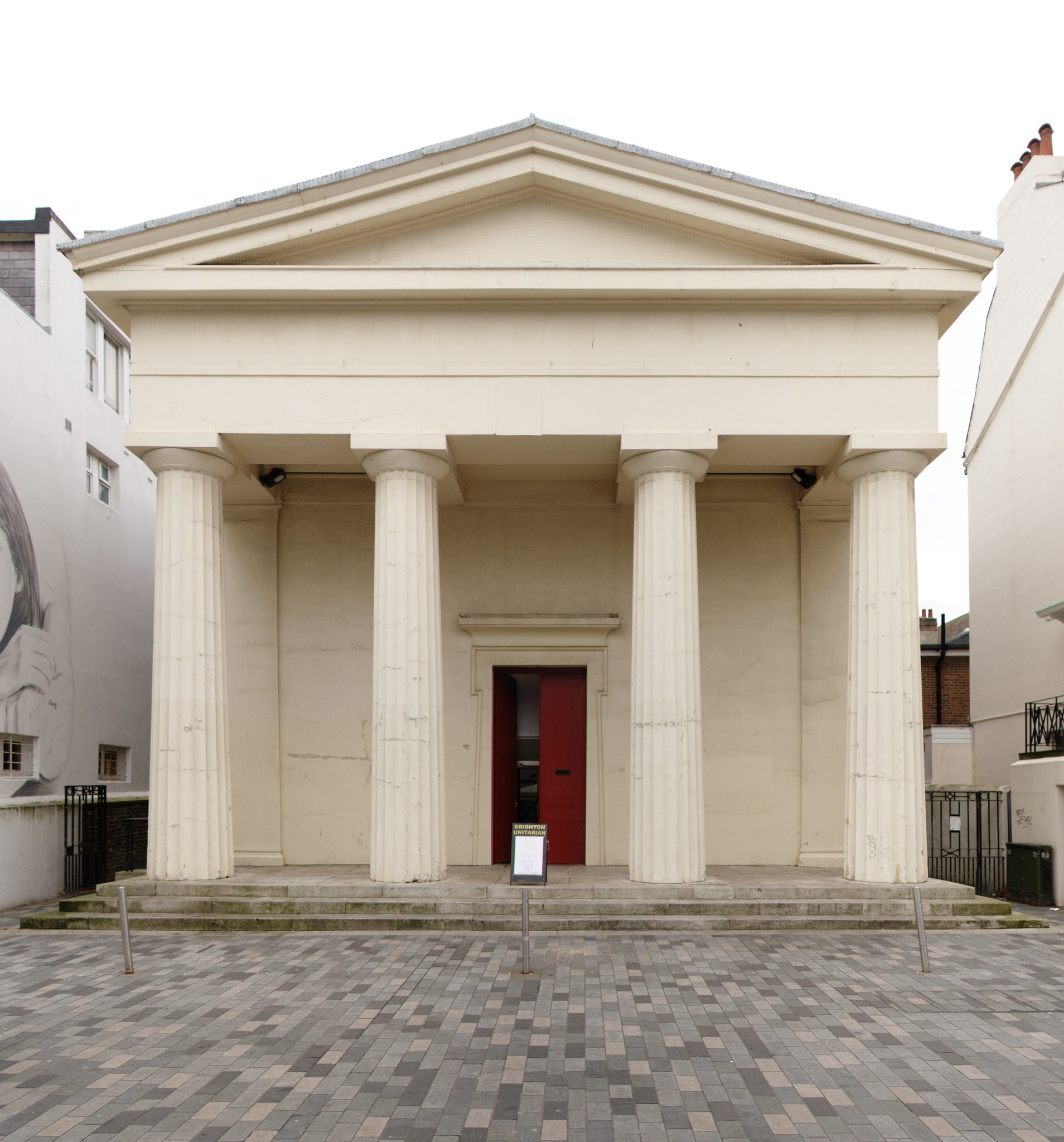
This is because these elements can be seen on many of the temples in Greece, especially in iconic places like the Acropolis and the Agora of Athens. One of these historic buildings, the Temple of Thesæus (or Hephaestus), as shown above, is where the architecture of Brighton Unitarian Church took its inspiration. Designed by Amon Henry Wilds, the design was meant to reflect the buildings studied by the classical scholar, Dr Morell, who became the chapel’s first minister. Completed in 1820, the church was designated as a Grade II listed building in 1952 by English Heritage.
“Brighton Unitarian Church” (CC BY 2.0) by Dominic’s pics
Union Chapel
Over the years, Union Chapel has had many uses and many names. Starting out as a church, it has also been called Union Street Chapel, Elim Free Church, Four Square Gospel Tabernacle, and Elim Tabernacle of the Four Square Gospel.


Whilst the foundations date to around the 1680s, the south facade takes on the Greek revival style of Wilds’ architecture. It also has Egyptian revival influences in the windows. The Grade II listed building was designated as such in 1971. While it no longer operates as a chapel, it is still open to the public as a pub.
The Church of the Holy Trinity
The Greek Orthodox Church of the Holy Trinity is perhaps a more understated example of Greek revival architecture in Brighton. Designed by George Cheesman Jr, the church was consecrated as St John the Evangelist in 1840.
Whilst the facade has tall pilasters, the stone construction is in a Flemish bond pattern. You can also find some beautiful triglyph and metope patterns on the lintels and in the mouldings. The building was listed as a Grade II building in 1971.
As you can see, Brighton has a rich history of Greek revival architecture. All that’s left to do is explore the area and see which buildings you can find to admire.