






















Before committing to an outdoor wedding, couples need to work through several questions that go well beyond how the venue looks in photographs. Location, licensing, guest comfort and a genuine weather plan all affect whether the day runs smoothly, and most of these decisions need to be made months before the invitations go out.
Getting the basics settled early makes the rest of the planning far easier, since caterers and hire companies all need clear answers about where things will actually happen if the weather doesn’t cooperate. The sections below cover what tends to catch couples out most.
Building in a proper weather backup
British weather rarely gives more than a few days’ warning, and a change of plan on the morning of a wedding is far easier to manage if it was built into the day rather than improvised at the last minute. Couples looking at backup and weatherproofing options often look at ways to hire a marquee London well in advance of the date. A marquee installed and tested a day or two before the wedding removes almost all the risk that a sudden downpour derails the ceremony or the reception.
The risk isn’t limited to rain either, since Britain’s unpredictable weather patterns can bring a sudden cold snap or an unexpected heatwave just as easily. Heaters, fans and shaded areas are worth planning for at the same time as any rain cover, rather than treated as an afterthought once the forecast starts to look uncertain.
Checking the venue is actually licensed for it
An outdoor setting only counts as a legal wedding venue if it holds the right licence, and this rule still surprises a lot of couples planning their day. Since 2022, outdoor civil ceremonies have been permitted in England and Wales, but only within the grounds of a licensed venue, so a private garden or a random field won’t work for the legal part unless the whole site holds a marriage licence.
This distinction matters most for couples set on a home garden or a borrowed field, since the legal ceremony may still need to happen at a register office nearby, with the outdoor setting reserved for the reception or a symbolic ceremony. Checking this with the local register office early avoids a difficult conversation close to the date.
Thinking about guests, not just the couple
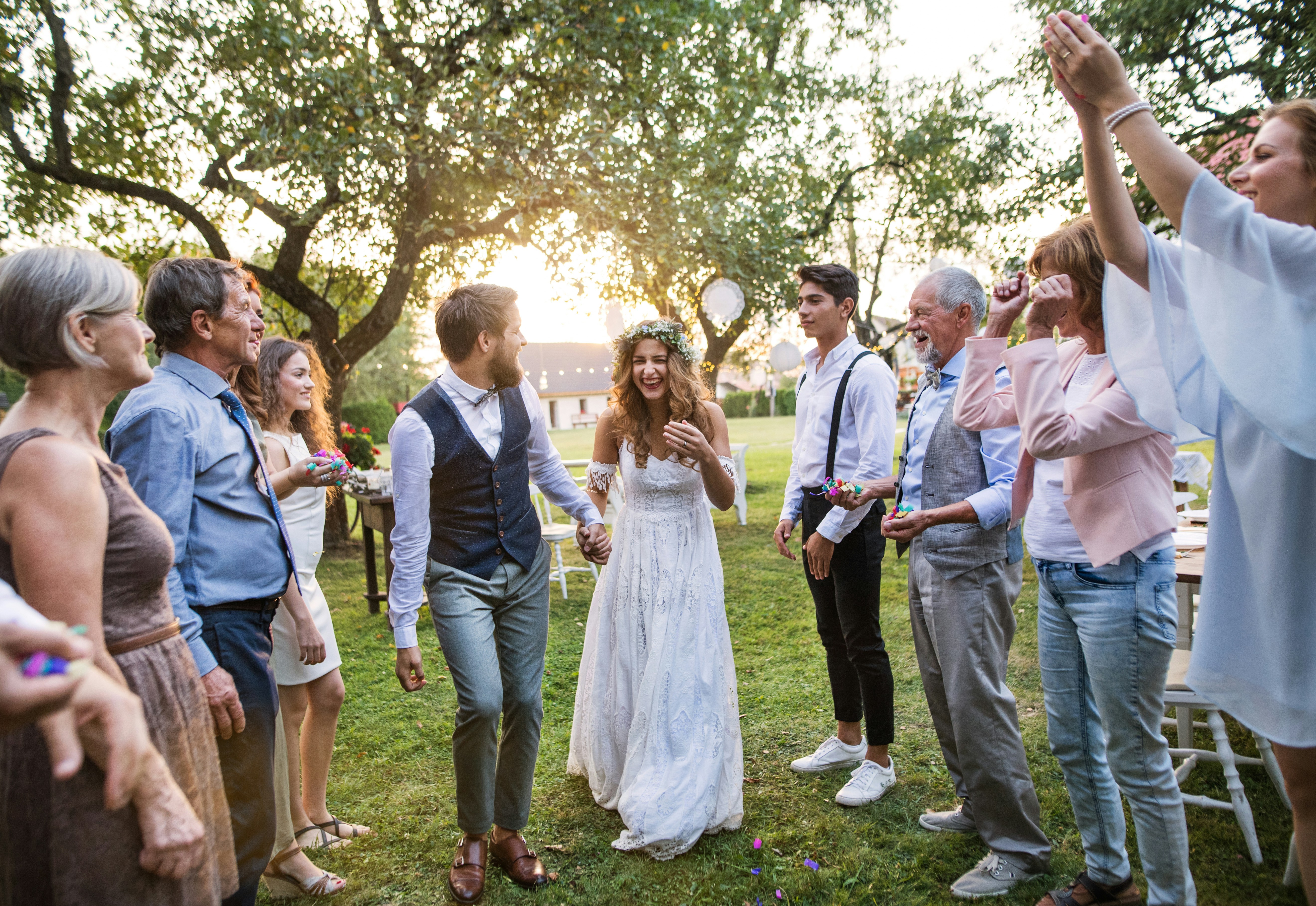
An outdoor wedding asks more of guests than an indoor one, from suitable footwear on grass or gravel to somewhere to sit that isn’t in direct sun for hours. Letting guests know the format in advance, through a wedding website or a simple note with the invitation, means fewer people turn up unprepared for a day spent mostly outside.
Details like accessible pathways, parking and clearly marked toilets matter more outdoors than at an indoor venue, where most of this is usually already built in. Walking the site at the time of day the wedding will actually take place, rather than relying on daytime photos taken months earlier, often reveals problems that are easy to miss on paper.
Committing to an outdoor wedding isn’t a decision to make lightly, but it isn’t one to avoid either. Getting the weather plan and the licensing right, then thinking through the day from a guest’s perspective, turns a lovely idea into a day that actually works, whatever the forecast decides to do.