





















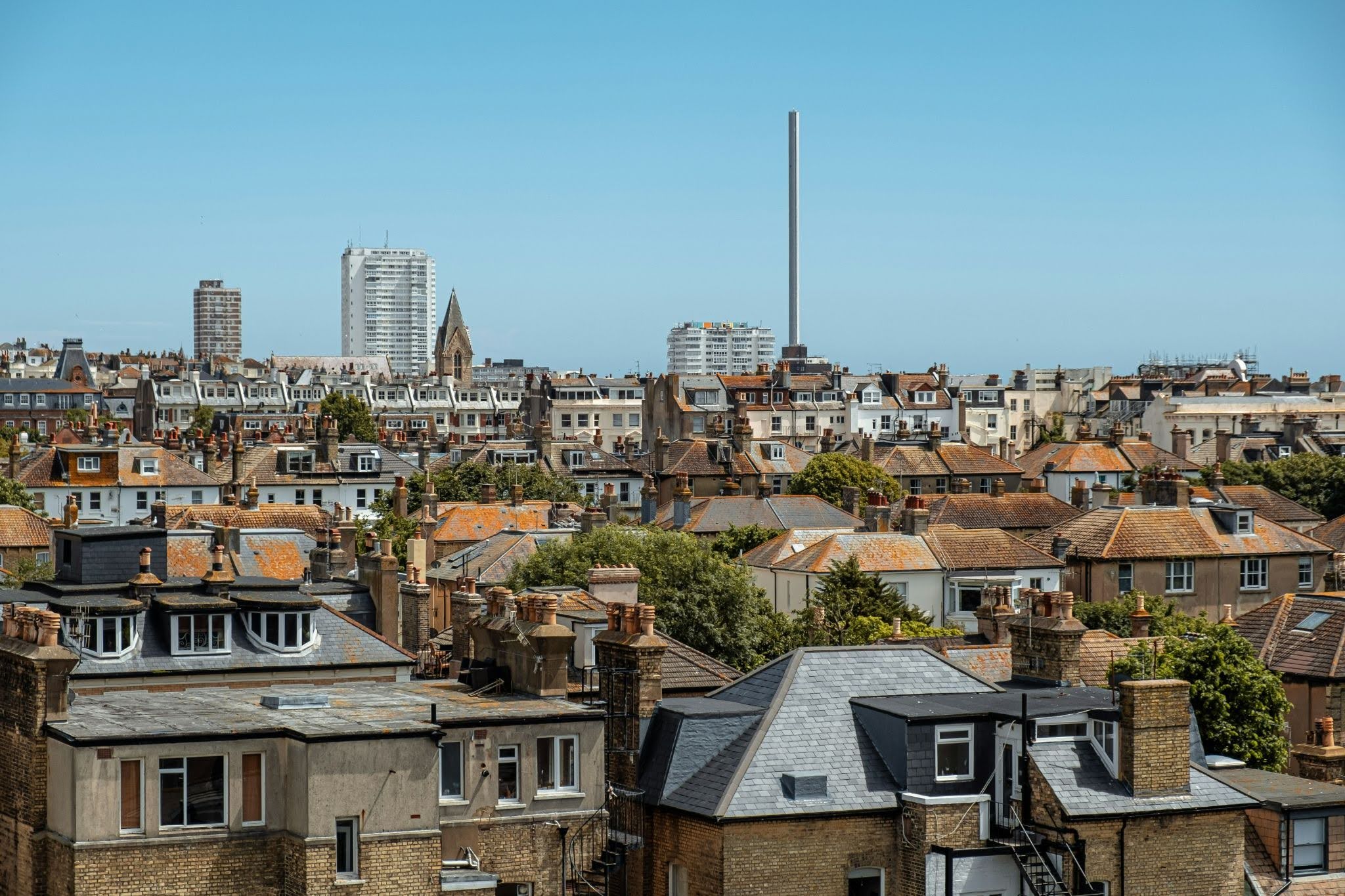


From Regency seafront terraces to converted Victorian flats, Brighton’s path towards tighter energy standards is being shaped by heritage controls, coastal exposure and a high-cost rental market.
The policy question has become a property question
Brighton landlords are moving beyond general awareness of future energy rules and towards decisions about individual buildings.
The UK Government intends privately rented homes in England and Wales to meet EPC C, or an equivalent standard under reformed certificates, by 1 October 2030 unless exempt. The proposed framework includes a maximum required investment of £10,000 per property and still requires legislation.
That policy lands differently in Brighton. Kemptown terraces, Brunswick and Regency Square properties, Hanover houses and converted flats around North Laine were not designed around modern insulation, heating or ventilation standards. Many also sit within conservation areas or contain listed fabric.
The practical question is what can be installed safely, what needs consent and what remains commercially sensible once the building’s condition and coastal setting are understood.
Brighton’s rental market raises the stakes
Brighton and Hove has a varied private rental sector, shaped by the University of Sussex, the University of Brighton and employment across healthcare, hospitality, digital and creative industries.
ONS figures put the average private rent at £1,816 a month in May 2026. The city also has 33 conservation areas and nearly 3,400 listed buildings, placing much of its central period stock within a sensitive planning context.
For owners weighing improvement, consent or a change of letting plan, the useful starting point is current performance. Vibrant Energy Matters carries out EPC assessment in Brighton and across wider Sussex, giving owners a clear view of the rating and recommended measures before coastal, heritage and tenure questions are considered.


The licensing framework adds another layer. Smaller shared houses can fall within the city-wide additional HMO scheme, while selective licensing applies in designated areas.
Brighton’s housing stock does not share one retrofit answer
Regency seafront and central terraces
Brunswick Square, Regency Square, Bedford Square, Kemp Town and Adelaide Crescent contain some of the city’s most recognisable architecture. Stuccoed façades, sash windows and solid-wall construction make these buildings visually important and technically sensitive.
Brighton and Hove’s statutory heritage includes Grade I, Grade II* and Grade II buildings. Listing or conservation controls can affect windows, external insulation, roof alterations, solar panels and visible heat-pump equipment. Coastal exposure also raises the importance of moisture management and suitable materials.
Victorian and Edwardian neighbourhoods
Hanover, Round Hill, Preston Park, Seven Dials, Fiveways, Montpelier, Clifton Hill and parts of Hove contain extensive Victorian and Edwardian housing.
Performance varies, but solid walls, older glazing and ageing services can make the intended standard harder to reach than in a modern home.
Converted period buildings
Many central flats were created within former townhouses. Leasehold arrangements can place windows, roofs, façades and communal systems outside an individual landlord’s control.
Freeholder consent and coordination with other leaseholders may therefore be as important as the technical recommendation.
Newer homes and purpose-built blocks
Newer flats and student developments generally begin from a stronger position because contemporary standards address insulation, glazing and building services from the outset.
The coast changes the specification
Buildings close to the sea face greater wind and wind-driven rain, while salt-laden air can place additional demands on metal components, coatings and external equipment.
That matters when specifying insulation systems, solar fixings, heat-pump equipment or replacement joinery. A product suitable for a sheltered inland street may need a different fixing method, finish or maintenance schedule near the coast.
Moisture deserves particular care in solid-wall buildings. Adding insulation without understanding how the wall absorbs and releases moisture can increase the risk of trapped damp, mould or decay.
Repairing defects, addressing rainwater disposal and maintaining ventilation should come before expensive technology. Brighton’s climate rewards good detailing and punishes shortcuts.
Three routes are taking shape for owners
Improve within the building’s limits
Suitable measures may include loft insulation, draught reduction, heating controls, efficient lighting and sympathetic secondary glazing.
Internal wall insulation, heat pumps and solar installations need closer assessment because appearance, moisture, noise, roof orientation and exposure all matter. Rear elevations can sometimes offer greater flexibility, but permission should never be assumed.
Register an exemption where evidence supports it
The intended framework includes routes linked to the cost cap, third-party consent, negative impacts, solid-wall insulation and cases where all relevant improvements have been completed.
Conservation-area or listed status does not create an automatic exemption. Refused consent or specialist evidence may support a route, but other suitable measures may still be required. Valid exemptions must be entered on the PRS Exemptions Register. Doing nothing is not an exemption.
Reconsider continued letting
Some owners may decide that improvement remains worthwhile. Others may conclude that continued letting no longer fits the property or their plans.
That judgement should reflect achievable performance, consent, cost, tenancy timing and the building’s condition rather than the EPC letter alone.
The useful work starts with the building
Owners can begin by checking the date, rating and recommendations on the EPC, then confirming conservation status, listing, tenure and licensing obligations.
A feasibility review should separate straightforward measures from work requiring planning, heritage or building-physics advice. Shared houses also need improvement plans coordinated with HMO licence conditions and occupants.
For listed or sensitive buildings, Historic England’s whole-building guidance and the Regency Society’s heritage resources can add context before professional advice and consent applications are developed.
Specialist design, consent and suitable contractors can take longer than standard work. ECO4 continues until 31 December 2026 for eligible households and properties, but funding is not automatic.
Brighton’s experience extends across Sussex
Similar coastal questions arise in Hove, Worthing, Eastbourne, Hastings and Chichester, where traditional buildings meet wind, rain and salt exposure.
Inland and rural East and West Sussex face different challenges, including traditional construction, limited mains-gas access and longer journeys for specialist contractors.
Brighton and Hove’s Climate and Nature Action Plan keeps lower-carbon buildings, adaptation and resilience within the city’s direction. Licensing schemes also continue to shape how rental homes are managed.
The wider lesson is that retrofit cannot be reduced to adding insulation or replacing a boiler. Heritage, moisture, exposure, tenure and occupation all influence whether an intervention works.
Brighton’s character will shape what remains lettable
Brighton’s property market has always been influenced by its architecture, the sea and the way people use its buildings. Those factors now shape the route towards the intended 2030 rental standard.
For owners of harder-to-treat period homes, 2026 is the year to establish the facts, even where work will be phased. The strongest response is property-specific: understand the EPC position, assess fabric and coastal exposure, identify responsible improvements and document genuine constraints.
Between now and 2030, some homes will be improved, some will change hands, and others may remain under valid exemptions or move to a different use. Brighton’s distinctive character will continue to influence those decisions. The considered approach starts with a proper assessment.
This article is for general information only and does not constitute financial, tax, legal, planning or property advice. UK Minimum Energy Efficiency Standards (MEES) for private residential lettings are subject to legislation and may change. Conservation area coverage, listed building consent requirements and coastal factors affect specific Brighton properties in ways that require proper professional assessment. Anyone considering EPC improvements, retrofit work, exemption applications or property disposals should take advice from qualified professionals appropriate to their circumstances. Vibrant Energy Matters is a UK EPC assessment provider covering Brighton and the wider Sussex area.